The Fifty-Year Magic

Why I Spent My Milestone Birthday at the Happiest Place on Earth

By Praveena Jogi

They say turning 50 is a major “level up” in life’s journey. As my milestone birthday approached, I’ll admit: I didn’t have a clue what to do.

That was until my husband had a spark of inspiration. He knew my heart better than I did, and his idea was simple yet profound: “Let’s take you to Disneyland.” Joined by my two sons, it turned into the most thoughtful gift—a chance to reconnect with the childhood magic I have loved for five decades.

Why is Disneyland Called the Happiest Place on Earth?

The answer lies in the immediate positive environment. As soon as we entered Disneyland, the land, the air, and the entire atmosphere were charged with positive vibes. It is a place where a “Digital Disney” ecosystem meets genuine human connection.

Despite the crowds and the “strollers everywhere” (from babies to toddlers), we remarkably hardly heard a single cry. In the long lanes, I saw teenagers and adults chatting, laughing, and truly connecting—often more than they do in their own homes. There is a patient, kind energy in the air; adults aren’t angry about the wait; they are simply happy. This environment washes away the “mad” and replaces it with “magic.”


Praveena’s “Zero-Defect” Disney Tips

I have been to Disney several times—both Disney World and Disneyland—but the landscape has completely shifted. From ticketing to wait times, the park has moved toward a “Digital Disney” model. To keep your trip as efficient and seamless as possible, here is how to navigate the new systems:

1. The Power of the App

Everything—from accessing your park tickets and Lightning Lane passes to mobile food ordering and hotel check-in—is now managed through the official Disneyland Mobile App.

  • Pro Tip: The app acts as a “single pane of glass” for your entire itinerary. However, because it uses GPS, it is a major battery drain. Make sure to pack a high-capacity portable charger and cables.

  • Linking: You can link all family tickets to one primary phone, which is what we did. It keeps all your data centralized and secure in one place.

2. Mastering the Lightning Lane

The “FastPass” of the past is gone. If you want to maximize your time, Lightning Lane entry is a must. While it is an extra investment, the time saved is invaluable for a short trip.

  • The Hotel Perk: We stayed at the iconic Disneyland Hotel and opted for a room with a Downtown Disney view. This allowed us to watch the fireworks from our own balcony!

  • Pro Tip: Staying on-site allows you to stay later or easily return to the room for a mid-day recharge.

3. Hydration Strategy: The Copper Advantage

We brought a copper water bottle this time, filled with ice and water. It stayed cold significantly longer and the water tasted much fresher.

  • The “Secret” Water Tip: Instead of filling stations, go to any food counter and ask for a free cup of iced water. It tastes better, and you can pour it right into your bottle.

4. Professional Memories via Disney PhotoPass

As a professional photographer, I was eager to see the quality of the Disney PhotoPass system. We opted for the all-inclusive ticket option, and it was worth it.

  • Zero-Defect Documentation: These photographers take as many photos as you want, and they appear in your app within 5 minutes. They are high-resolution and free to download with your pass. Just remember to download them within 45 days before they are removed from the cloud!

  • More Magic: I will be uploading my personal professional shots from this trip to my photography page, PJ4Ever Photography on Facebook, and my portfolio at PJ4Ever.com.


Quick Reference: The Disneyland Planning Checklist

If you are planning your own magical getaway, use this checklist to ensure a seamless experience:

  • [ ] Download the App: Set up the Disneyland App before you arrive.

  • [ ] Stay Powered: Pack a portable phone charger.

  • [ ] Link Tickets: Link all family tickets to one device for faster scanning.

  • [ ] Buy Lightning Lanes: Save up for these—they are a must-have for short trips.

  • [ ] Stay On-Site: Book a Disneyland Hotel for easier park access and the fireworks view.

  • [ ] Copper Hydration: Bring a copper bottle and ask for free cup water at food counters.

  • [ ] Use PhotoPass: Capture memories with professional photographers throughout the park.

  • [ ] Download Photos: Save your professional shots within 45 days.

  • [ ] Check PJ4Ever: Visit PJ4Ever.com to see how the magic looks through a professional lens.


The Magic of Believing at Any Age

Beyond the rides and the spectacle, Disneyland serves as a powerful reminder that our capacity for wonder should never have an expiration date. At fifty, I realized that we often get so caught up in the “how” of our daily lives—the logistics, the schedules, and the costs—that we forget the importance of the “wow.” Stepping into that park is an act of courage; it is a choice to let go of the adult world’s cynicism and embrace a place where dreams are treated as reality. It inspires us to carry that same light back into our own lives, reminding us that no matter how many years have passed, it is never too late to start a new chapter, believe in a little magic, and find the joy in the journey.

Fifty and Full of Wonder

At 50, I felt the exact same magic I felt at five. Navigating Disneyland’s new digital ecosystem reminded me why I am so passionate about my mission at Pravision™.

Whether you are managing a milestone birthday through an app or managing a growing company, having a “single pane of glass” to view your operations is what creates a truly seamless, “zero-defect” experience. It allows you to focus on the joy of the moment rather than the stress of the process.


About the Author: Praveena Jogi

Praveena Jogi is the Founder of Pravision™, a business solutions firm dedicated to creating “Zero-Defect” environments for entrepreneurs. When she isn’t streamlining business operations, she is capturing the world’s beauty through her lens at PJ4Ever Photography.

From the Yugas to the Natural World

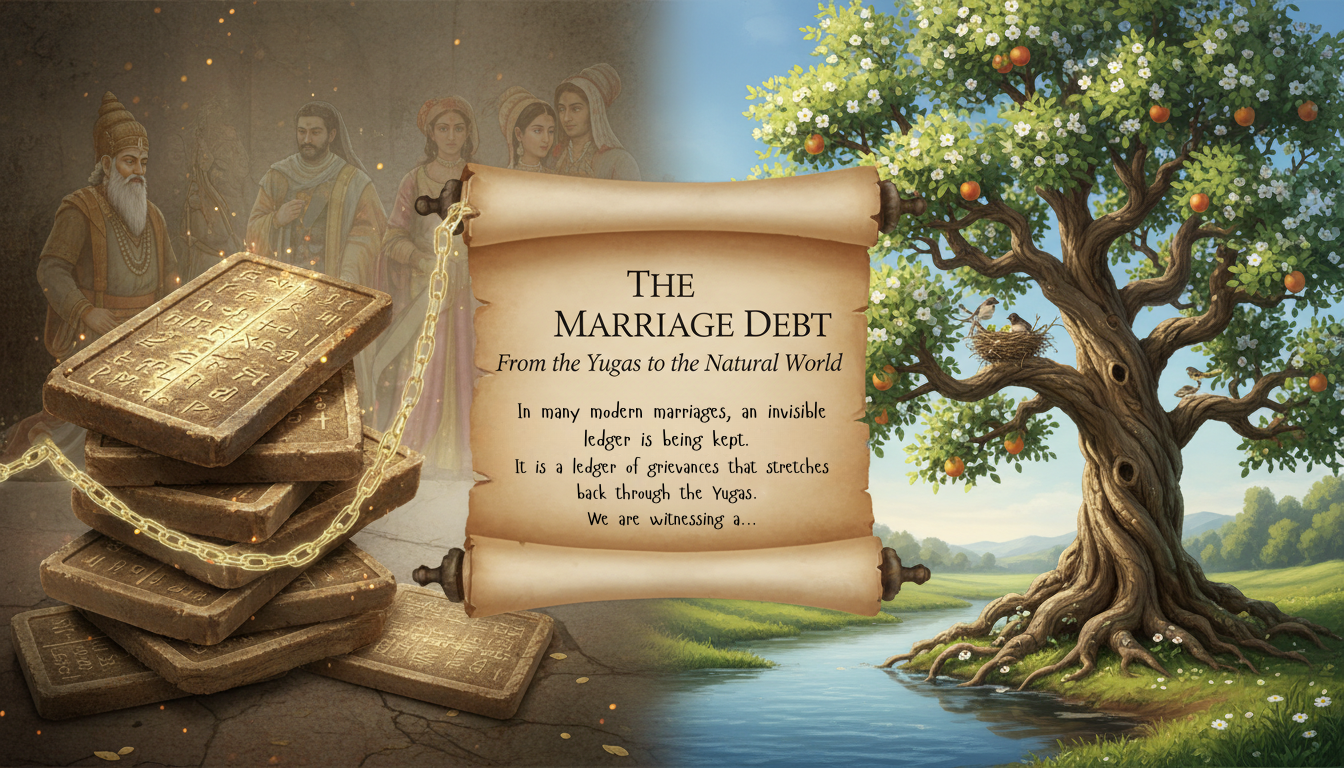
The Marriage Debt: From the Yugas to the Natural World

In many modern marriages, an invisible ledger is being kept. It is a ledger of grievances that stretches back through Yugas. We are witnessing a rising trend where the push for “freedom” has taken a turn toward a role reversal—a belief that for true justice to occur, the “oppressor” must now become the “servant.”

1. A Message to the Powerful Woman

First, kudos to the ladies and girls for growing in all aspects of life. But as you become powerful, I ask you: Why fight for simple things? If you come home exhausted, hire a maid or order takeout. Why expect your husband to do the work when he also did the same hard work and came home tired just like you? When you stop obsessing over “equality,” you will find options to outsource the labor. Remember: “IF YOU DON’T DO THE WORK FOR ONE DAY, THE WORLD DOES NOT END.” With this mindset, there is no fight and no ego.

2. The Cosmic Pendulum: Why the Yugas Matter Now

History is a cycle of declining spiritual awareness. Throughout all Yugas, the male role has remained the same, yet in our current age, the husband is in constant trouble.

  • Treta Yuga (The Age of Duty): In the time of Rama and Sita, there was no “Equality” because it wasn’t needed. Rama fulfilled his duty as the superior lead, and Sita didn’t ask if it was “fair” to go to the forest; she went because she was the soul of the home. There was peace because there was no competition.

  • Dvapara Yuga (The Age of Energy): By the time of Krishna and Satyabhama, the human ego began to rise. Satyabhama represents the “Modern Woman”—powerful and proud. When Krishna touched her feet, it wasn’t because he was inferior; it was a divine strategy to melt her ego. He knew that if a wife’s ego stays high, the husband’s peace dies. Even a God had to manage the trouble caused by a wife’s ego.

  • Kali Yuga (The Age of Quarrel): We are now in the darkest age. Today, the husband is in constant pain. He works hard and provides, yet he returns home to a “battlefield.” Every small thing—a missed chore or a different opinion—becomes a reason for the wife to fight him in the name of “equality.” This artificial movement has taught women to point fingers, leaving the husband feeling like he can never do enough.

3. A Word to the Husbands: The Power of Caring

Husbands, we know we can’t change you, but remember: when a wife fights for “equality,” she is often actually looking for caring.

You don’t need to touch her feet like Krishna. Just give her a glass of water when she comes home or ask, “How was your day?” That small act will touch her heart and satisfy her ego. She will likely do the rest of the work for the day happily. Remember: you are the man of the house, but caring is a must. It brings balance, not equality.

4. Roots vs. Evolution: The Biological Reality

The universe was created with specific laws. As the proverb goes: “You can never make a dog’s tail straight.” A fish cannot be a human. Similarly, the Universe created Man and Woman with different qualities. There is no design in nature for Men and Women to be “equal.”

If you want true equality, can you move a pregnancy to the male for a few months? Since that is biologically impossible—since the Universe assigned the sacred duty of birth to the woman—why search for “equality” in small household duties? When the most fundamental roles of life cannot be swapped, forcing an artificial 50/50 split on everything else only leads to conflict.

5. Lessons from the Natural World

Nature provides the ultimate examples of commitment without the “equality” argument:

  • The Penguin: The male protects the egg in the freezing cold while the female hunts. They rejoin without ego, simply fulfilling their nature.

  • The Sea Horse: The male carries the eggs in his own tummy. Their bond is for life because they don’t change their roles or question their partner.

Conclusion: Breaking the Cycle

A marriage cannot survive a “revenge” phase where the wife tries to make the husband a servant. This mindset achieves nothing but loneliness. Real equality is not about making men “pay” for the past; it is about accepting our unique, unchangeable roles. Stop fighting over the chores of the house. Husbands, provide the care; wives, provide the heart. Close the cosmic ledger and aim for a partnership of the soul.


Image Gallery


The Path of 2026

The Path of 2026

The clock strikes a beautiful new beginning, As the journey of 2026 starts spinning. Thank you for the support that will come your way, Guiding your vision through each passing day.

Thank even the fever, the flu, or the strain, For they build the armor to handle future pain. Thank even those who peek in with bad intent, For that negative omen was an opportunity sent. With your aura, you turn that energy into gold, Transforming the dark into a story that’s bold.

But most of all, look within and see, The power of your own tenacity. Thank yourself for never giving up, No matter how full or low the cup.

Whether the result is massive or small, Your hard work is the greatest win of all. Thank yourself for remembering that truth: Your effort is the payoff, in age or in youth.

This is not a resolution, but a moment of grace, To thank others and yourself for the path you embrace. Close your eyes for just one second and say: “Thank you, ________” for the strength of today.

In the 31,536,000 seconds of the year that has just begun, Thank you for taking just one to find the peace that makes you one. There is nothing too big and nothing too small, For the architect of greatness who will stand through it all.

Wish you a Happy New Year 2026!

SHARE :
Facebook
Twitter
LinkedIn
Written By

Praveena Jogi

More Articles

The Great Debate

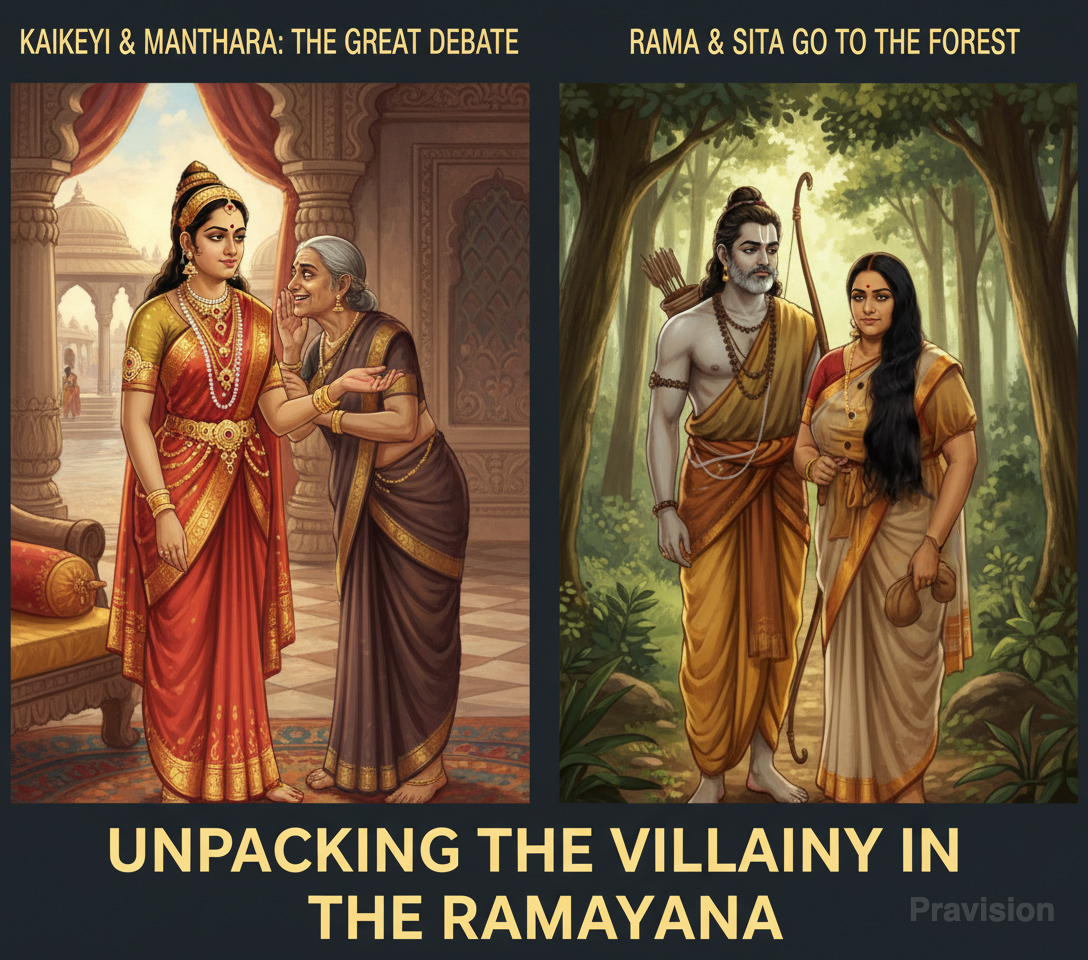
Kaikeyi or Manthara

During a recent ladies’ evening, amidst the usual lively chatter, an unexpected topic completely seized the room: Who is the true villain of the Ramayana—Queen Kaikeyi or the maid Manthara?

You might wonder why such a deep, ancient epic found its way into a modern party, but the truth is, the topic was instantly captivating. It sprang up when a friend described her challenge in teaching Bala Vihar. To engage today’s kids in stories like the Ramayana, she has to contextualize the lessons in modern life. As an activity, she posed this very question to her students: Who is the bad person?

The results, both in her classroom and at our party, were striking: Approximately 90% chose Kaikeyi, and 10% chose Manthara.

Meet the Instigators

To set the stage:

  • Manthara: The cunning, hunchbacked maid. She is the initial poison, the one who plants seeds of jealousy and suspicion in the Queen’s mind. She is the architect of the tragedy.

  • Kaikeyi: The youngest and once-beloved Queen, mother of Bharata. Before the banishment, she was known for her deep affection for Rama. She is the executor of the tragedy, the one who ultimately forces the devastating demand upon the King.

Why the Majority Blames Kaikeyi

The argument for Kaikeyi’s greater guilt relies on the principle of accountability. As a Queen and a mother, she had the ultimate authority. Manthara could only suggest, but Kaikeyi chose to act. She allowed a single person’s jealous counsel to override her lifelong love for Rama and her husband, Dasharatha. Even if Manthara planted the seed, Kaikeyi was the fertile ground.

Why the Minority Sides with Manthara

Those who blame Manthara focus on causation. Without Manthara’s persistent, malicious effort, Kaikeyi would have happily seen Rama crowned. Manthara introduced the idea of royal injustice where none existed. In this view, Kaikeyi was a vulnerable victim of psychological warfare—not acting as herself, but as a tool of Manthara’s malice.

The “Karmic/Divine” Perspective: The Destiny Argument

Beyond the human drama lies a deeper layer often discussed in traditional circles: The Destiny Argument. In many retellings, it is believed that the gods intervened to ensure the higher purpose of Rama’s incarnation was fulfilled. It is said that the Goddess Saraswati “sat on Manthara’s tongue” or clouded Kaikeyi’s intellect to trigger the exile.

From this perspective, neither woman is a true villain; they were mere instruments of a larger cosmic plan. If Rama had not been sent to the forest, the demon-king Ravana would never have been defeated. While this doesn’t erase their earthly actions, it suggests that their “villainy” was a necessary catalyst for the triumph of Dharma.

The Final Verdict: Influence vs. Action

The debate boils down to a timeless question: Is the person who originates the evil idea worse than the person who has the power and acts upon it?

Our party agreed: While Manthara is the initial source of the poison, Kaikeyi is the greater villain. A powerful person is always accountable for the choices they make, regardless of the influence. Manthara was the whisper, but Kaikeyi was the roar that tore the kingdom apart.

Now, we turn the question over to you: Does the “Destiny Argument” change your view, or do you still hold the individuals accountable? Who do you believe is the true villain? Share your thoughts in the comments below!

SHARE :
Facebook
Twitter
LinkedIn
Written By

Praveena Jogi

More Articles

Beyond the Screen: Rethinking Who Truly Influences Us

Rethinking Who Truly Influences Us

The term “influencer” today conjures a specific, often polished image: celebrities, viral TikTok stars, or lifestyle gurus with follower counts stretching into the millions. We associate influence with high production value, perfectly scripted content, and the massive scale of a social media platform.

But is influence truly reserved for those with a blue checkmark and a professional content team? Absolutely not.

The True Definition of an Influencer

We need to reclaim the original meaning of the word. Influence is fundamentally about sharing experience, advice, and lessons learned. It is about imparting wisdom that changes behavior, guides decisions, and impacts lives—regardless of the size of the audience.

In this sense, some of the most profound and impactful influencers in our lives are the ones who don’t have a single sponsored post: our grandparents.

The Family Doctor: Think of your grandmother. She might give you a home remedy for a cough or a cure for a stomach ache. Is she a doctor? No. But is she an influencer? Yes! We listen because her remedies are effective and have been passed down through generations—a form of verified, time-tested knowledge.

The Financial Advisor: Consider your grandfather. He might offer financial advice rooted in decades of practical experience, such as saving, budgeting, or avoiding unnecessary debt. Initially, we might dismiss it, thinking, “The times have changed.” Yet, subconsciously, his influence takes hold, and we often find ourselves adopting his habits and successfully saving money.

The most important metric for an influencer is not their follower count or their view metrics; it is the quality and impact of the information they provide.

The Gendered Paradox of Public vs. Private Influence
Now, consider this from the women’s side: How many women gurus or massive female influencers do you actually see compared to their male counterparts in certain fields? Even when women succeed at influencing millions publicly, a different, often more critical question remains: Have they truly fulfilled or achieved success in their own home?

For a woman, the truest measure of influence starts not on a global stage, but within her most immediate community. If she can influence and create stability at home, she can influence the whole galaxy. This suggests that domestic wisdom—the uncompensated, loving influence—holds a value far surpassing millions of digital followers.

Polish vs. Purpose: A Tale of Two Influences
The modern digital landscape highlights a fascinating paradox in how we absorb information:

On one hand, we have the popular Guru. A male person might eagerly listen to this figure because the message—be good, do good, and everything will be good—is packaged flawlessly. This Guru has millions of views, excellent video presentation, well-written scripts, and a complete marketing team working tirelessly to deliver a polished message. The man is convinced, influenced, and doesn’t hesitate to pay thousands of dollars to follow the teachings, making the Guru richer and more popular.

On the other hand, the same male person has a mother or a wife. The very same words—be good, do good—have been repeated to him since childhood, spoken with love, care, and genuine interest in his well-being. Yet, he may ignore them due to factors like tone, past conflicts, or the simple notion, “I am a man, why should I listen to advice from home?”

In this scenario, the man is attracted to the polish of one message, while he dismisses the caring, loving essence of the other. The crucial lesson is this: If that man started listening to the loved ones, the advice comes out for free, with no cost, and the outcome is often far greater: lasting happiness and stability.

True influence is not a transaction; it is a transfer of wisdom rooted in trust. We must remember to value the unpolished, yet profound, influence of those closest to us.

SHARE :
Facebook
Twitter
LinkedIn
Written By

Praveena Jogi

More Articles

Rain, Rain, Go Away

When "Rain, Rain, Go Away" Echoes in Our Hearts: A Reflection on Human Connection

Remember that childhood plea, "Rain, rain, go away, come again another day"? It was a simple request, born from a desire for sunshine and play. But lately, I've been thinking about that song, and how its sentiment seems to have subtly shifted in our modern human interactions. It's almost as if our collective hospitality has become, "Go away, go away, come again another yuga (age)."

The rain, in all its beautiful unpredictability, offers a profound mirror to our own complex nature. We accept rain as it is – a fundamental force shaped by a myriad of factors.

The Unpredictable Showers of Life: A Human Forecast

Just as rain varies based on its proximity to large bodies of water, local topography, global wind patterns, and the seasonal dance of atmospheric systems, so too does human behavior fluctuate. We are creatures of intricate internal weather systems, our "forecast" influenced by:

  • Mood: A sudden squall of frustration, a gentle drizzle of contentment, or a bright, sunny disposition.

  • Money: The weight of financial pressures can cast a shadow, just as abundance might bring a light, expansive feeling.

  • Liking & Interest: We pour our energy into what we love, much like a downpour nourishes a parched field. Where interest wanes, so too does our engagement.

  • Willingness: Sometimes, the clouds of reluctance gather, making us less inclined to open up, to connect, to simply be there.

We don't judge the rain for falling harder in one place and barely touching another. We understand its mechanisms. Perhaps, then, we should extend the same grace to human behavior. It is up to us, as individuals, to accept the varied expressions of those around us without immediate judgment, just as we accept the rain in our lives.

Proximity and Profit: The Human Humidity Index

Consider how geography dictates rainfall. Locations closer to oceans or large lakes experience higher humidity, leading to a greater potential for rain. There's a tangible exchange, a constant give and take of moisture that brings life-giving precipitation.

Don't we see a striking parallel in human relationships? We often find ourselves closer to individuals when there's a perceived "benefit"—a shared goal, mutual support, or even just the ease of a convenient connection. This isn't inherently negative; interdependence is natural. But it highlights how readily we gravitate towards those "humid" zones of potential gain or comfort.

The "Busy" Deserts: Inland Areas of the Soul

Conversely, inland areas, especially those far from a significant water source, often experience less rainfall. They become drier, more arid, less conducive to lush growth.

In our human landscape, these "inland areas" are often marked by the ubiquitous declaration: "I'm busy." When proximity offers no immediate "humidity" of benefit or ease, when the connection requires traversing a vast, dry expanse, our societal response often defaults to this convenient, yet isolating, "busyness." We retreat into our own territories, sometimes inadvertently creating deserts in our relationships, where the refreshing showers of genuine connection become scarce.

Finding Our Own Rain Dance – And Remembering the Roots

The rain doesn't ask for permission to fall. It simply is. It nourishes, it cleanses, it sometimes disrupts, but it is always part of the cycle.

Perhaps, instead of wishing for people to change their nature, we can learn to appreciate the various "weather patterns" of human interaction. We can choose to be the gentle drizzle, the steady downpour, or even the brief, refreshing shower in someone's life, understanding that not every moment calls for a deluge.

Let's challenge ourselves to move beyond the "go away, come again another yuga" mentality. Let's cultivate spaces where the human humidity index is high, not just for perceived benefit, but for the simple, life-giving act of being present and open to one another, come rain or shine.

And here lies the ultimate lesson from the rain:

No matter if the rain falls less or more, in gentle drops or a mighty cascade, it all eventually finds its way to the roots, nurturing life and sustaining the earth. Similarly, with us humans, no matter the "weather" of our lives – the storms we face, the dry spells of solitude, or the sunny days of connection – we must never lose our humanity. It is the taproot that connects us all, the fundamental essence that allows us to grow, to empathize, and to truly live. May our actions, like the rain, always feed the deep roots of kindness and connection.

SHARE :
Facebook
Twitter
LinkedIn
Written By

Praveena Jogi

More Articles

The Secret of Nothing

The Secret of Nothing

From శూన్యం (Śūnyam) to Spiritual Abundance

How many of you know the true secret, the Rahasya of the legendary Chidambaram Temple? It’s a secret about nothing—a space where Shiva dances in the form of pure ether, a void that is, paradoxically, everything.

Just a year ago, this concept of nothingness (Telugu: శూన్యం) was the unlikely starting point for my spiritual journey with my G.

Out of Nothing, Everything Manifested

Life was simply the daily routine: cook, work, sleep, eat, chat, clean. There was no grand plan for travel. We had no set vacation time carved out, no dedicated budget, and frankly, no great health to speak of. We started with literally nothing arranged.

Yet, this journey—from nothing to everything—is the true meaning of the Chidambaram secret.

It began with one simple, pure thought in G’s mind: a desire to visit Kailash. From that single seed of intention, everything miraculously fell into place. Our journey expanded to include the most sacred spots: Varanasi, Ayodhya, and Prayagraj.

This experience taught me the deepest lesson: the true Chidambaram Rahasya is finding your inner conscience and letting that conscience find you everything you need.

Measuring Faith: A Question of Duty

This entire experience brings up a question I often ponder, especially regarding my role as a wife: Is it enough to be a “good house wife” if you only offer formal prayers twice a year?

I confess I’m not the house wife who adheres to the strict 5 AM shower and daily prayer routine. I fulfill my duties and do my work when I like. My formal, ritual prayers happen only on Vinayak Chavithi and during Deepavali.

I leave the judgment of this practice to each individual, as devotion is a personal measure. But for me, there is no measurement, because who are we to measure the divine?

God is in the Gratitude, Not the Asking

My faith is simple and constant: I believe in God, and God is everywhere.

I don’t need to ask Them for help when times are difficult, because They are always with me, watching over me. They know exactly what to do and when to do it.

My practice is one of constant gratitude. I think of God, fetching their names many times a day—to thank Them, to share my day with Them, to talk to Them. The moment my work is done, my first thought is appreciation for their presence and protection.

The secret of nothing—the శూన్యం—is the realization that profound devotion is not confined to grand rituals or temple visits. It is found in the simple, continuous gratitude woven into the fabric of everyday life. The small, daily acts are the prayer.

What does the concept of nothingness mean for your faith and your life? Share your thoughts below.

SHARE :
Facebook
Twitter
LinkedIn
Written By

Praveena Jogi

More Articles

Unforgettable Moments

Unforgettable Moments

A Father’s Day Inspiration

Father’s Day is a time to celebrate those incredible men who shape our lives, and for me, that journey begin with my dad. He’s more than just a father figure; he’s the one who literally gave me a space in this world, and whose presence has always been a fortress against fear.

Every morning, a gentle kiss on the forehead from a man who stands at a towering 6 feet 6 inches spoke volumes of his boundless care and unwavering support. In his presence, there was, and still is, no room for fear. He’s always been my safe harbor.

I vividly remember our secret escapades, especially our trips to eat out, which we’d often sneak out for, leaving my mom in the dark for a little while. Our favorite clandestine meal? Cashew idlis at the Maruri rooftop in Tirupati. Now, hold on before you judge! Yes, idlis. And yes, at that time, it was simply “the Maruri hotel” – the concept of a fancy “rooftop restaurant” wasn’t even in our vocabulary back then. But let me tell you, I have never tasted idlis as good as those. And no, I’m not comparing them to my mom’s delicious idlis; that’s a sacred category of its own! The sheer joy of sneaking out, savoring that food, then later confessing to my mom and receiving her playful scolding – that whole experience was, and remains, utterly priceless.

Another source of pure delight was going on rides with him on his Royal Enfield Bullet. Imagine this: in all of Tirupati, he was the only one who owned such a magnificent machine. Those rides weren’t just about the wind in our hair; they were about the bond, the adventure, and the feeling of being utterly secure with him at the helm.

But do you know the moment I saw the purest joy, the most profound love, shining in his eyes and heart? It was when I said yes to the groom he showed. His gaze, a thousand volts strong, locked onto my mom. The look he gave her, silently conveying “that is my daughter,” is a moment etched into my memory, never to be forgotten. It was a look of immense pride, of validation, and of deep, unconditional love.

So, who is this extraordinary man? He is my dad, my Nana. And I am his Ninni. He is the one and only person in this entire world who calls me Ninni. And for that, and a million other cherished moments, I am eternally grateful. Happy Father’s Day to the giants who stand tall in our lives.

Then, I went from one home to another, and there I met a different kind of man – the Man of the Jogis, my Father-in-Law. While our interactions weren’t as frequent, it was clear that his presence was powerfully felt. He was truly one of the most respectful men I’ve ever encountered, deeply devoted to caring for his wife. He was her steadfast backbone in every aspect, even extending to the simple yet profound gesture of cutting vegetables in the kitchen. My mother-in-law was, without a doubt, the luckiest woman. One of my earliest and most cherished memories with him dates back to the very first day of my marriage. We were at my in-laws’ place, and the memorable meal we shared was “Saddi Annam” – which translates to fermented rice in English, and my kids affectionately call “Ice Biryani.” It was a dish that quickly was our favorite for both him and me. We even managed to make everyone else eat it, because people do not prefer that as it is considered poor man’s food, though I might have earned myself a spot on a “blacklist” within the first week for my zealous influence!

And then, came my husband. For nineteen years, my dad had been the unwavering hand holding mine, guiding me through life. On a momentous day, he lovingly placed my hand into the care of the one and only man he knew would bring him profound happiness – a moment eternally etched in his memory. Since that day, I’ve held onto my husband’s pinky finger, walking the seven sacred steps of marriage beside him, and following his path for over thirty years. He has been my constant guide, the illuminating light in my life, my steadfast fighter, my insightful critic, my trusted advisor – truly, he is everything. He is none other than my G.

Happy Father’s Day!

SHARE :
Facebook
Twitter
LinkedIn
Written By

Praveena Jogi

More Articles

The Empty Seat at Our Table

The Empty Seat at Our Table

SHARE :

A Call to Reconnect and Cherish Family Bonding

The image I shared captures a moment of profound reflection at the “Wild Table of Love” installation by Gillie and Marc at the World Trade Center Oculus. Surrounded by magnificent bronze sculptures of endangered animals, there’s an undeniable pull to the empty seats, an open invitation to join a crucial conversation about wildlife conservation, dialogue, and understanding. It’s a powerful reminder that unity, even among diverse species, is vital for survival.

As I sat there, a poignant thought struck me: What if, in our increasingly fragmented world, something as fundamental and precious as family bonding became an endangered concept?

We spend so much time advocating for the preservation of our planet’s wild inhabitants, building awareness so that majestic creatures don’t vanish from our dictionaries or our lives. But what about the bonds that define us, that shape our earliest memories, that form the bedrock of our communities? Are we actively preserving the essence of what it means to be a connected family?

Imagine a future where children grow up without understanding the comfort of a shared family meal, the strength of unconditional support, or the joy of simply being together. A future where the words “family bonding” become archaic, a quaint phrase from a bygone era, removed from our collective dictionary because the practice itself has faded.

That thought, for me, is truly unsettling. We see the signs: the increasing pull of individual screens, the demands of busy schedules, the erosion of shared moments. It’s a silent erosion, perhaps, but one that could lead us down a path where we mourn the loss of something vital, just as we mourn the loss of a species.

This isn’t about fear-mongering; it’s a heartfelt plea and an urgent invitation. Just as “The Wild Table of Love” beckons us to protect our natural world, I believe it’s time we consciously, intentionally, and passionately advocate for the preservation of our families. We need to raise awareness that fostering strong family bonds isn’t a luxury, but a necessity for individual well-being and societal health.

So, I invite you to look at that empty seat next to me at the “Wild Table of Love.” Metaphorically, join me in taking that seat to raise awareness for family bonding. Let’s commit to making time, initiating conversations, creating traditions, and simply being present for those who matter most.

Let’s raise a glass – not just to the protection of our wildlife, but to the proactive preservation of family bonding for tomorrow. So that our children, and our children’s children, will never forget what it means, and will never have to remove “family bonding” from their dictionary. It’s time to gather around our own tables, wild or otherwise, and nurture the love that truly sustains us all.

Facebook
Twitter
LinkedIn
Written By

Praveena Jogi

More Articles

Lorem ipsum dolor sit amet, consectetur adipiscing elit. Ut elit tellus, luctus nec ullamcorper mattis, pulvinar dapibus leo.

Embrace Your Radiance: True Independence, Inspired by Sirivennela

Embrace Your Radiance: True Independence, Inspired by Sirivennela

(An Inspirational Speech for Women)

Dear friends, sisters, shining lights,

Today, I want to talk about a word that resonates deeply within each of us: Independence. But what does it truly mean to be an independent woman in today’s world? The great Telugu poet, the late Sri Sirivennela Sitarama Sastry, through his profound lyrics, offers us a vision not of isolation, but of magnificent, self-assured strength that can coexist beautifully with our cherished relationships.

There’s a common misconception that independence for a woman means she must walk alone, that she must be single, detached from the fabric of family. But let’s pause and consider this. Imagine, after India gained its hard-fought independence, if every single citizen then declared they must be individually independent from everyone else, forming their own personal ‘country.’ What would we have? Not a strong, united nation, but millions of isolated fragments.

So, to all the wonderful ladies and girls out there, let us not misunderstand or misuse the incredible power of our independence. It is not a weapon to sever ties, nor a shield to hide behind in solitude. If you can find joy, support, and happiness living with your family – your mother, father, your in-laws, your husband, your children – this does not diminish your independence. In fact, it can be the very stage upon which your independent spirit shines brightest.

Let’s draw inspiration from the breathtaking imagery penned by Sirivennela Sitarama Sastry in the lines you shared:

“Mabbullo tulutunn merupapona” – Can you feel that? “Like a lightning bolt that peeks through the clouds!” Ladies, believe that you possess this inherent brilliance, this power to illuminate. Your independence is that inner spark, that sudden, captivating energy that is uniquely yours. You can be that dazzling lightning bolt, a force of nature, shining your light from within.

“Vayyari vanjallai digirana”“Shall I descend like a graceful, beautiful maiden?” This speaks to the power of shaping your life with grace and intention. True independence is the agency to mold your destiny, to carry yourself with elegance and poise, regardless of your circumstances. You can gracefully navigate your path, making choices that reflect your inner strength and beauty.

“Sandranlo pongutunn alanypona”“Like a wave swelling in the ocean.” Be that joy in your own sea! Your independence allows you to cultivate an ocean of happiness, strength, and resilience within yourself. This inner abundance, this surging wave of positive energy, can then touch and uplift everyone around you, especially your loved ones. If you think independence is being alone, then what is the use of you being happy? If there is no one around you, you are alone, and that joy remains unshared, perhaps even diminished. True joy finds its deepest meaning when it can radiate outwards.

“Sandello rangulenno chilikena”“Shall I sprinkle the many colors of twilight?” Your unique talents, your perspectives, your laughter, your compassion – these are the myriad colors you bring to the world. An independent spirit is free to express these colors authentically, painting her life and the lives of those she loves with vibrancy and joy.

And then, this powerful call to action: “Pillgale pallakiga dikkulanni chuttirana”“Making the gentle breezes my palanquin, shall I roam all directions?” This is the essence of taking your life into your own hands. Take care of yourself first. Nurture your dreams, your well-being, your spirit. The gentle breeze here isn’t about a solitary journey, but about having the freedom and self-reliance to choose your direction, to explore your potential, with the world as your canvas. You are the driver of your own ‘pallaki’ (palanquin).

When you embrace this radiant, self-assured independence, when you are that lightning bolt, that graceful presence, that joyful wave, when you steer your own life with care and courage, then, as Sirivennela beautifully prophesies:

“Naa kosam navaragale natyamadanuga”“For my sake, the ‘Navaragas’ (the nine aesthetic emotions/essences, the very fullness of life) will dance!” Everything follows. Joy, respect, love, fulfillment – they will all be drawn to your confident, self-possessed energy. The world will indeed seem to celebrate you.

For this beautiful blossoming, for this dance of life to occur, being alone is not a prerequisite. To equate solitude with independence can sometimes lead to what might be perceived as selfishness, a cutting off rather than a building up. True independence empowers you to be a stronger partner, a more understanding daughter, a more capable mother, a more supportive friend. It allows you to contribute to your family and community from a place of wholeness, not from a place of needing to prove your detachment.

So, let us redefine independence not as a departure from our relationships, but as the journey to becoming our most authentic, powerful, and radiant selves within them. Let the wisdom of Sirivennela Sitarama Sastry’s poetry inspire us to be like the lightning, the graceful maiden, the surging wave, and the master of our own journey, all while cherishing the beautiful tapestry of family and connection.

Be brilliant. Be graceful. Be joyful. Be you. And watch as the world dances for you.

To help you visualize the beautiful enactment of such powerful emotions and grace, I’ll be pointing to the iconic song featuring Bhanupriya, where these sentiments are so wonderfully portrayed. 

Thank you.

~ Praveena Jogi

SHARE :
Facebook
Twitter
LinkedIn
Written By

Praveena Jogi

More Articles