In today’s competitive business environment, it’s more important than ever to provide excellent customer experience. And one of the most important aspects of a positive customer experience is politeness.
What is politeness? It’s the act of being courteous and respectful to others. It’s about showing kindness, consideration, and empathy. In the context of customer experience, politeness means treating customers with respect throughout their entire journey with your company, even when they are difficult or demanding.
Why is politeness so important? There are many reasons. It builds trust and rapport with customers. When customers feel like they are being treated with respect, they are more likely to trust the company and do business with them again. Politeness can also help to de-escalate conflict. When customers are upset or angry, politeness can help to calm them down and resolve the situation peacefully.
Think about it: politeness makes customers feel valued and appreciated. When customers feel like they are important to a company, they are more likely to be loyal customers. It’s simple but powerful.
Here’s a personal example: I’ve been going to the same Indian grocery store for decades. Even after I moved to a different location, I still make the drive to that specific store. Why? It’s not just about the price, cleanliness, or variety of products (though those are important too!). It’s about the way they treat their customers. They always greet me with a smile, offer to help me find things, and make me feel like a valued customer. That’s what keeps me coming back. That positive experience keeps me loyal.
This doesn’t just apply to grocery stores, either. It applies to all types and sizes of companies. Whether you’re a small business owner or a large corporation, politeness is essential for building strong customer relationships.
And guess what? Even AI is getting in on the act!
Artificial intelligence is increasingly playing a role in enhancing the customer experience. Here’s how:
AI-powered chatbots: These can provide instant support, answer common questions, and even resolve simple issues, all while maintaining a polite and helpful demeanor.
Personalized recommendations: AI can analyze customer data to offer tailored product suggestions or solutions, making the customer feel understood and valued.
Sentiment analysis: AI can help identify customer emotions in real-time, allowing companies to respond appropriately and de-escalate potentially negative situations.
By combining the strengths of AI with the human touch of mindful customer service, companies can create truly exceptional experiences for their customers.
How can businesses improve politeness in their customer experience?
Here are a few tips:
Train employees on the importance of politeness.
Set clear expectations for politeness in all customer interactions.
Provide feedback to employees on their level of politeness.
Recognize and reward employees who are consistently polite to customers.
By following these tips, businesses can create a more positive customer experience and build stronger relationships with their customers.
Remember: Politeness is an essential part of a great customer experience. It’s about treating customers with respect, kindness, and consideration. By being polite, businesses can build trust, de-escalate conflict, and make customers feel valued.
Pravision: More Than a Call. It’s Calm, Reassurance, and Easy Connection.
Have you ever called a business and felt instantly transported to a place of calm? That’s exactly what happens when you dial 925-744-6999 to reach Pravision. Forget jarring hold music and endless transfers; calling Pravision is an experience in itself.
From the moment you hear the soothing meditation music filling your ear, you know this is different. It’s a subtle but powerful cue, gently shifting your mindset from the hustle and bustle of your day to a space of tranquility and focus.
And then, there’s the anticipation. You know you’re not just waiting for any customer service representative. You’re waiting to connect with Praveena Jogi herself, the heart and soul of Pravision.
This personalized touch sets Pravision apart. It speaks volumes about their commitment to individual attention and building genuine relationships with their clients.
But the experience doesn’t end there. When Praveena answers, her warm and empathetic demeanor instantly puts you at ease. You feel heard, understood, and valued. It’s clear that she’s not just there to answer your questions, but to truly connect with you on a human level.
In a world of automated responses and impersonal interactions, calling Pravision is a refreshing reminder of the power of human connection. It’s an experience that leaves you feeling not just satisfied, but truly cared for.
Have you called Pravision? Share your experience in the comments below!
In today’s competitive business world, simply meeting customer expectations isn’t enough. To truly stand out and thrive, you need to forge lasting connections that translate into loyalty and growth.
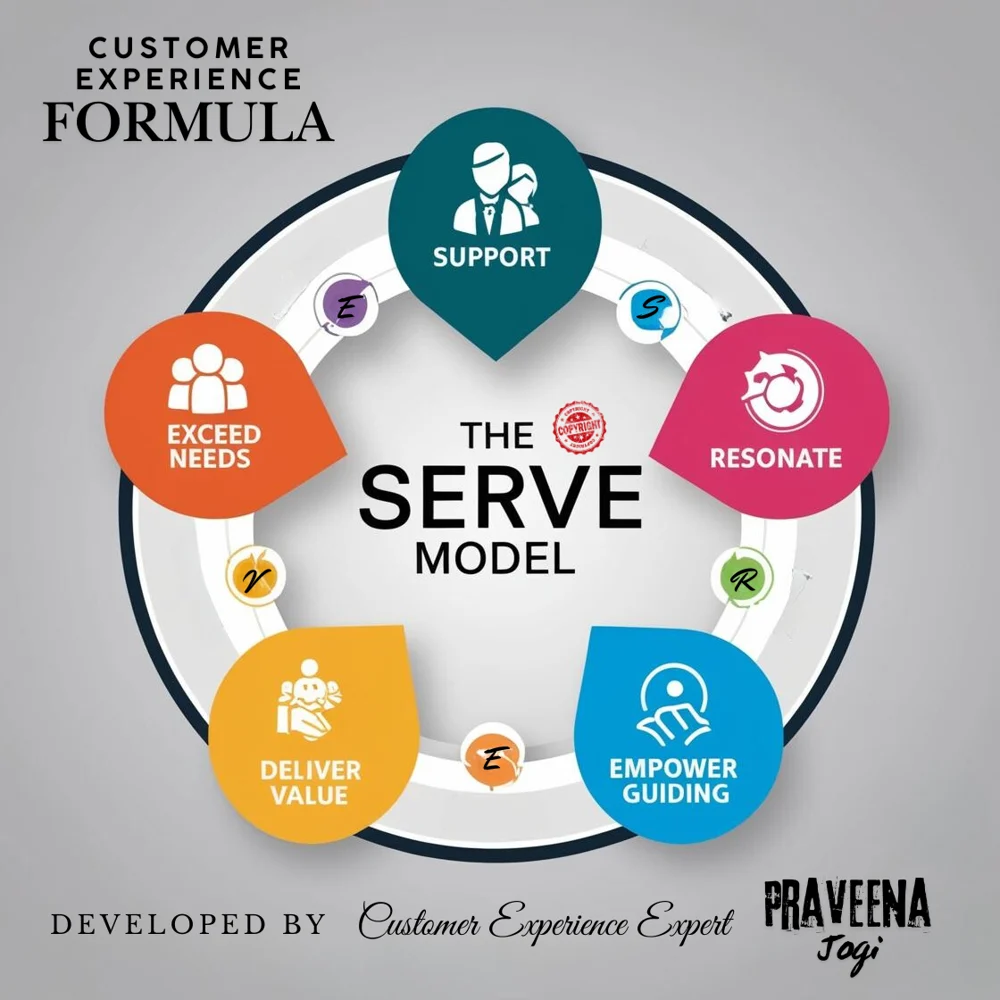
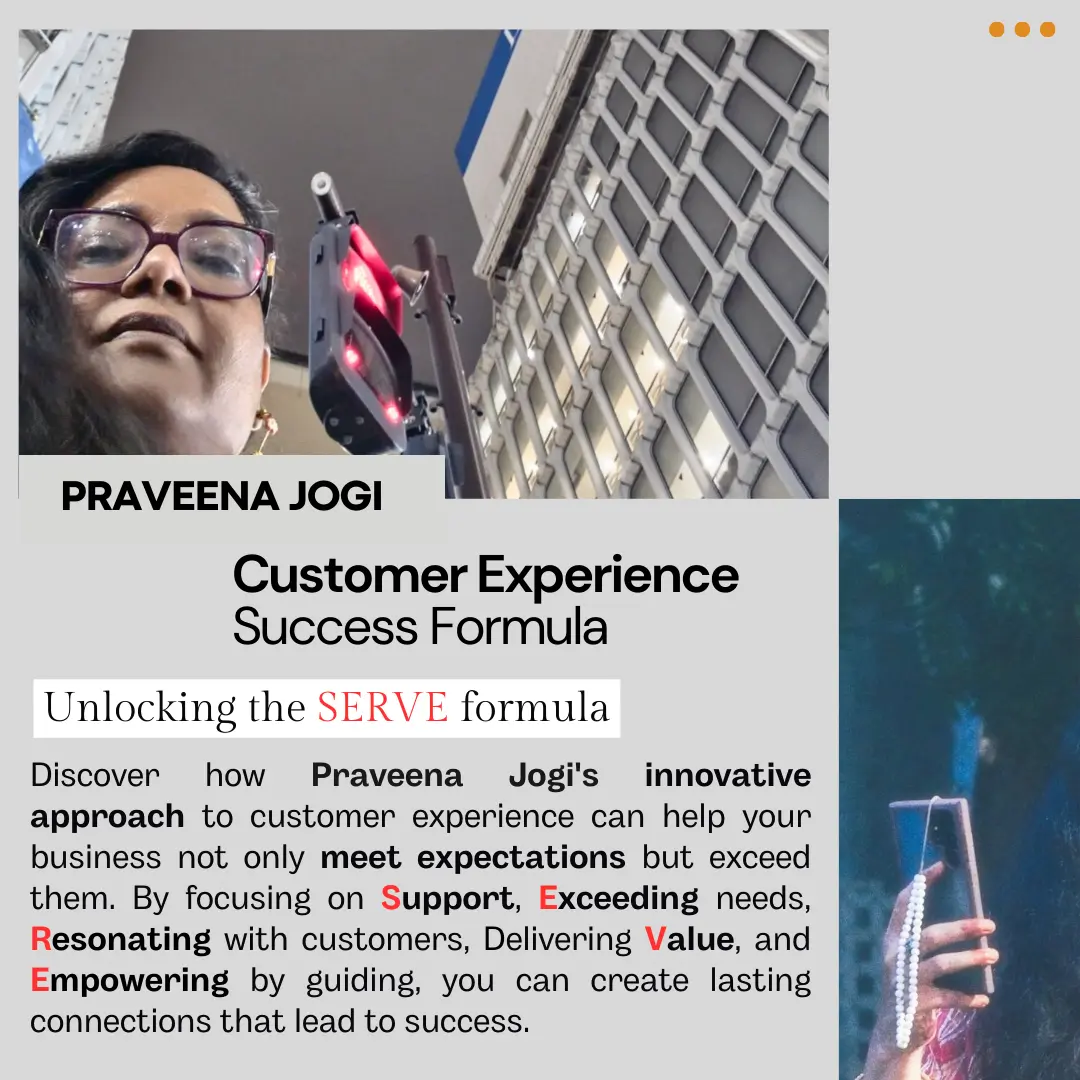
In today’s competitive landscape, simply meeting customer expectations isn’t enough. To truly thrive, businesses need to go above and beyond, forging lasting connections that translate into loyalty and growth. This is where Praveena Jogi’s innovative SERVE formula comes in, offering a powerful framework for achieving customer experience success.
SERVE is more than just a catchy acronym; it’s a philosophy that puts the customer at the heart of every interaction. Let’s break down each element:
S – Support: This is the foundation of any great customer experience. It’s about providing timely, reliable assistance and resolving issues efficiently. But true support goes beyond troubleshooting; it’s about proactively anticipating needs and offering helpful solutions.
E – Exceed Needs: Meeting expectations is a starting point, but exceeding them is what creates a truly memorable experience. This could involve personalized recommendations, exclusive offers, or simply going the extra mile to make a customer feel valued.
R – Resonate: Building rapport and establishing an emotional connection is crucial. Understanding your customers’ values, motivations, and pain points allows you to tailor your interactions and create a sense of genuine empathy.
V – Deliver Value: Every interaction should provide value to the customer, whether it’s through helpful information, efficient service, or a positive emotional experience. This builds trust and reinforces the perception of your brand as a valuable partner.
E – Empower by Guiding: Empowerment is about giving customers the tools and knowledge they need to succeed. This could involve providing clear instructions, offering self-service options, or simply guiding them towards the best solutions for their needs.
Praveena Jogi’s SERVE formula is a holistic approach that encompasses all aspects of the customer journey. By focusing on each of these elements, businesses can create a customer experience that is not only satisfying but truly exceptional.
Here’s how SERVE can benefit your business:
Increased customer loyalty: When customers feel valued and supported, they are more likely to remain loyal to your brand.
Improved brand reputation: Positive customer experiences lead to positive word-of-mouth marketing and a stronger brand reputation.
Increased revenue: Happy customers are more likely to make repeat purchases and recommend your business to others.
Reduced customer churn: By addressing customer needs proactively, you can reduce the likelihood of them switching to a competitor.
Enhanced employee engagement: When employees are empowered to deliver exceptional service, they are more likely to be engaged and motivated.
Ready to unlock the power of SERVE?
Start by evaluating your current customer experience and identify areas where you can improve. Implement the SERVE principles in your interactions and empower your employees to do the same. By putting the customer at the center of everything you do, you can create a truly winning formula for success.
Have you ever called a business and felt instantly transported to a place of serenity? That’s the magic of dialing 925-744-6999 to reach Pravision.
Forget the usual jarring hold music and frustrating transfers. Calling Pravision is an experience in itself, designed to soothe your soul and make you feel truly valued.
From Stress to Stillness
The moment you hear the gentle meditation music playing softly in your ear, you know this is different. It’s a subtle cue that gently shifts your mindset from the chaos of your day to a space of tranquility and focus.
And then, there’s the delightful anticipation. You’re not just waiting for any customer service representative. You’re about to connect with Praveena Jogi herself, the heart and soul of Pravision.
The Personal Touch that Makes All the Difference
This personalized approach sets Pravision apart. It speaks volumes about their commitment to individual attention and building genuine relationships with their clients.
But the experience doesn’t stop there. When Praveena answers, her warm and empathetic voice instantly puts you at ease. You feel heard, understood, and valued. It’s clear that she’s not just there to answer your questions; she genuinely cares about connecting with you on a human level.
A Refreshing Reminder of Human Connection
In a world of automated responses and impersonal interactions, calling Pravision is a breath of fresh air. It’s a reminder that genuine human connection still matters.
It’s an experience that leaves you feeling not just satisfied, but truly cared for.
Have you called Pravision? Share your experience in the comments below!
In today’s competitive business landscape, providing positive and helpful customer support is important for success. Support engineers play a vital role in ensuring excellent customer service, as they often serve as the primary point of contact for clients experiencing technical issues. Crafting effective responses as a support engineer requires a balance of empathy, professionalism, and problem-solving skills. This article will explore the dos and don’ts of crafting responses as a support engineer, offering practical advice for maintaining a customer-focused approach in all interactions.
Dos: Best Practices for Crafting Positive and Helpful Responses
When it comes to crafting positive and helpful responses as a support engineer, there are several best practices to follow. These techniques not only promote effective communication but also contribute to maintaining a customer-focused approach in all interactions.
Starting with a friendly greeting sets the tone for the entire interaction. Addressing clients by their name demonstrates personal attention and helps establish rapport. For example, use “Hello, Praveena” instead of a generic “Dear Customer.”
Show empathy and understanding by acknowledging clients’ feelings and frustrations. An empathetic response might say, “I understand how frustrating this issue can be for you,” instead of dismissing their concerns with, “It’s not my problem.”
Politeness and courtesy are essential for maintaining a professional tone. A polite response could be, “Please let me assist you with this,” rather than an unhelpful, “You should have known this already.”
Personalized responses address clients’ unique concerns and demonstrate a genuine interest in resolving their issues. Instead of directing clients to a generic FAQ, try, “Based on the details you’ve provided, here’s what we can do.”
Proactively offering solutions or assistance shows commitment to resolving clients’ issues. A helpful response would be, “I can help you resolve this by…” instead of refusing help with, “I can’t do anything about that.”
Using positive language focuses on possible solutions and promotes a can-do attitude. For example, “We can definitely work on a solution for you” is more effective than the negative, “This is impossible.”
Express gratitude by thanking clients for bringing their concerns to your attention. A simple “Thank you for reaching out” goes a long way compared to an unappreciative, “You’re lucky we even respond.”
Keep clients informed by providing regular updates on issue resolution. An informative response could be, “I’m working on this and will update you within [timeframe]” rather than leaving them in the dark with, “I don’t know when this will be fixed.”
Offer relevant resources to help clients find additional information. Instead of telling them to “Google it,” share a helpful link, such as, “You can find more information in our knowledge base here [link].”
Encourage feedback from clients to gather insights for improvement. A feedback-encouraging response might say, “Your feedback is valuable to us. Please let us know how we can improve” instead of disregarding their opinions with, “Whatever, it doesn’t matter.”
Close interactions on a positive note with a friendly and approachable tone. A positive closing statement could be, “If you have more questions in the future, don’t hesitate to reach out. Have a great day!” rather than the dismissive, “Goodbye.”
Finally, follow up with clients to ensure their satisfaction and maintain an ongoing relationship. Proactively offer to follow up within a specific timeframe, such as, “I’ll follow up with you in [timeframe] to ensure everything is resolved to your satisfaction,” instead of neglecting their concerns with, “I’m done here.”
Don’ts: Common Pitfalls to Avoid When Crafting Responses
While it’s essential to focus on best practices when crafting responses as a support engineer, it’s equally important to recognize and avoid common pitfalls that can negatively impact the client experience. The following are some examples of what not to do when communicating with clients.
Avoid using impersonal greetings, as they can make clients feel unimportant. For instance, starting a response with “Dear Customer” instead of addressing the client by their name can create a disconnect.
Showing a lack of empathy by disregarding clients’ feelings can lead to frustration and dissatisfaction. An unempathetic response like “Not my problem” can significantly harm the client relationship.
Being rude or impolite by using unprofessional language can damage your company’s reputation. A rude response such as “What’s wrong with you?” is not only offensive but also counterproductive in resolving the issue at hand.
Providing generic responses without addressing clients’ specific concerns can make them feel unheard. For example, directing clients to “Refer to our documentation” instead of offering personalized guidance can be frustrating.
Refusing to help clients by ignoring their issues can lead to dissatisfaction and lost business. An unhelpful response like “Not my job” demonstrates a lack of commitment to client success.
Using negative language that focuses on problems instead of solutions can create a pessimistic atmosphere. A response such as “This is a waste of time” can demotivate clients and hinder problem-solving efforts.
Forgetting to express gratitude by not acknowledging clients’ input can make them feel undervalued. An ungrateful response like “You’re bothering us” can discourage clients from reaching out in the future.
Leaving clients in the dark by not providing updates on issue resolution can cause anxiety and uncertainty. An uninformed response like “I don’t know” does not inspire confidence in your ability to resolve their concerns.
Being unhelpful with resources by not offering relevant information can leave clients feeling unsupported. An unresourceful response such as “You should figure it out” can exacerbate their frustration.
Disregarding feedback by ignoring clients’ insights for improvement can hinder your company’s growth. A feedback-dismissing response like “We don’t care” can alienate clients and damage your reputation.
Ending interactions on a negative note by closing with a discouraging tone can leave clients feeling disheartened. A negative closing statement such as “So, what else do you want?” can create a lasting negative impression.
Neglecting to follow up with clients to ensure their satisfaction can lead to unresolved issues and dissatisfaction. A lackluster follow-up like “Not my concern anymore” signals a lack of commitment to clients’ success.
Conclusion
In summary, crafting positive and helpful responses as a support engineer involves following key dos and don’ts, such as using friendly greetings, showing empathy, and providing personalized solutions, while avoiding pitfalls like being rude or unhelpful. Maintaining a customer-centric approach in all interactions is essential for building lasting relationships and ensuring client satisfaction.
By implementing these best practices, support engineers can not only improve their communication skills but also contribute to the overall success of their company. Begin incorporating these techniques today to enhance your client relationships and drive positive outcomes for both your clients and your organization.
As a support engineer, providing positive and helpful responses is important for maintaining client satisfaction and fostering a company’s success and reputation. In this role, one must navigate complex technical issues while keeping the client’s needs at the forefront. By addressing these challenges with a focus on empathy and understanding, support engineers become instrumental in enhancing their organization’s customer-focused approach and innovative solutions. Trust Websiteistic, We Take Your Business To The Next Level!
Understanding the Needs of Your Clients
To effectively address clients’ concerns, support engineers must first understand their needs. Active listening and asking the right questions are crucial in this process. By paying close attention to the client’s descriptions of their issue and asking pertinent follow-up questions, support engineers can accurately assess the client’s level of technical knowledge and tailor their responses accordingly.
It is essential to adapt the level of complexity in explanations to suit the client’s understanding, ensuring that they feel heard and supported. At the same time, empathetic and compassionate support is vital. By putting themselves in the client’s shoes, support engineers can better appreciate the frustration they may be experiencing and provide assistance that not only resolves their issue but also leaves them feeling valued and respected.
Crafting Positive and Helpful Responses
When assisting clients, support engineers should focus on crafting responses that are both positive and helpful. Key elements of a positive response include acknowledging the client’s issue, expressing empathy and understanding, and offering a solution or next steps. By addressing these components, support engineers can ensure that clients feel heard and reassured that their concerns are being handled with care.
Additionally, there are several tips for crafting helpful responses. First, using clear and concise language is essential. This allows clients to easily understand the information being conveyed and reduces the likelihood of confusion or miscommunication. Second, avoiding jargon and overly technical terms is important, as these can be intimidating or confusing for clients who may not have extensive technical knowledge. Finally, breaking down complex concepts into easy-to-understand explanations can further improve client comprehension and satisfaction with the support provided.
Going Above and Beyond for Your Clients
In addition to providing positive and helpful responses, support engineers can further enhance client satisfaction by going above and beyond their standard duties. This may involve providing additional resources and support, such as sharing relevant articles, tutorials, or tools that can help clients better understand or resolve their issue. It also includes following up with clients to ensure their issue has been resolved and to address any lingering concerns or questions they may have.
Continuously learning and staying updated with industry trends and best practices is another way for support engineers to go the extra mile for clients. This knowledge enables them to offer cutting-edge solutions and informed advice, thereby reinforcing the company’s reputation for innovation and expertise. Finally, becoming an advocate for clients within the organization ensures their needs and feedback are considered in decision-making processes, further enhancing the customer-focused approach that sets Websiteistic apart.
The Impact of Positive and Helpful Responses on the Business Landscape
Providing positive and helpful responses to clients has a significant impact on the overall business landscape. For one, it strengthens client relationships and builds trust, as clients feel heard and valued when their concerns are addressed with empathy and understanding. This trust, in turn, enhances the company’s reputation and credibility, establishing it as a reliable provider of high-quality services.
Furthermore, satisfied clients are more likely to engage in repeat business and refer others to the company, contributing to its continued growth and success. On an internal level, fostering a culture of positive and helpful client support can create a more positive work environment, as employees take pride in their role and strive for excellence in their interactions with clients. Overall, the impact of positive and helpful responses not only benefits clients but also bolsters the company’s standing in the competitive business landscape.
Overcoming Challenges in Providing Positive and Helpful Support
Despite the best intentions, support engineers may sometimes encounter challenges in delivering positive and helpful support. Dealing with difficult clients or situations requires patience, understanding, and effective communication skills to navigate these interactions successfully. Maintaining composure and focusing on resolving the issue at hand can go a long way in ensuring a satisfactory outcome for both parties.
Managing time and prioritizing support requests is another crucial aspect of providing excellent support. By developing efficient workflows and honing time management skills, support engineers can attend to clients’ needs promptly and effectively. Staying motivated and maintaining a positive attitude are also essential, as they directly influence the quality of support provided to clients. Lastly, seeking feedback and continuously improving one’s support skills enables support engineers to stay ahead of the curve and deliver the exceptional assistance that clients have come to expect from Websiteistic.