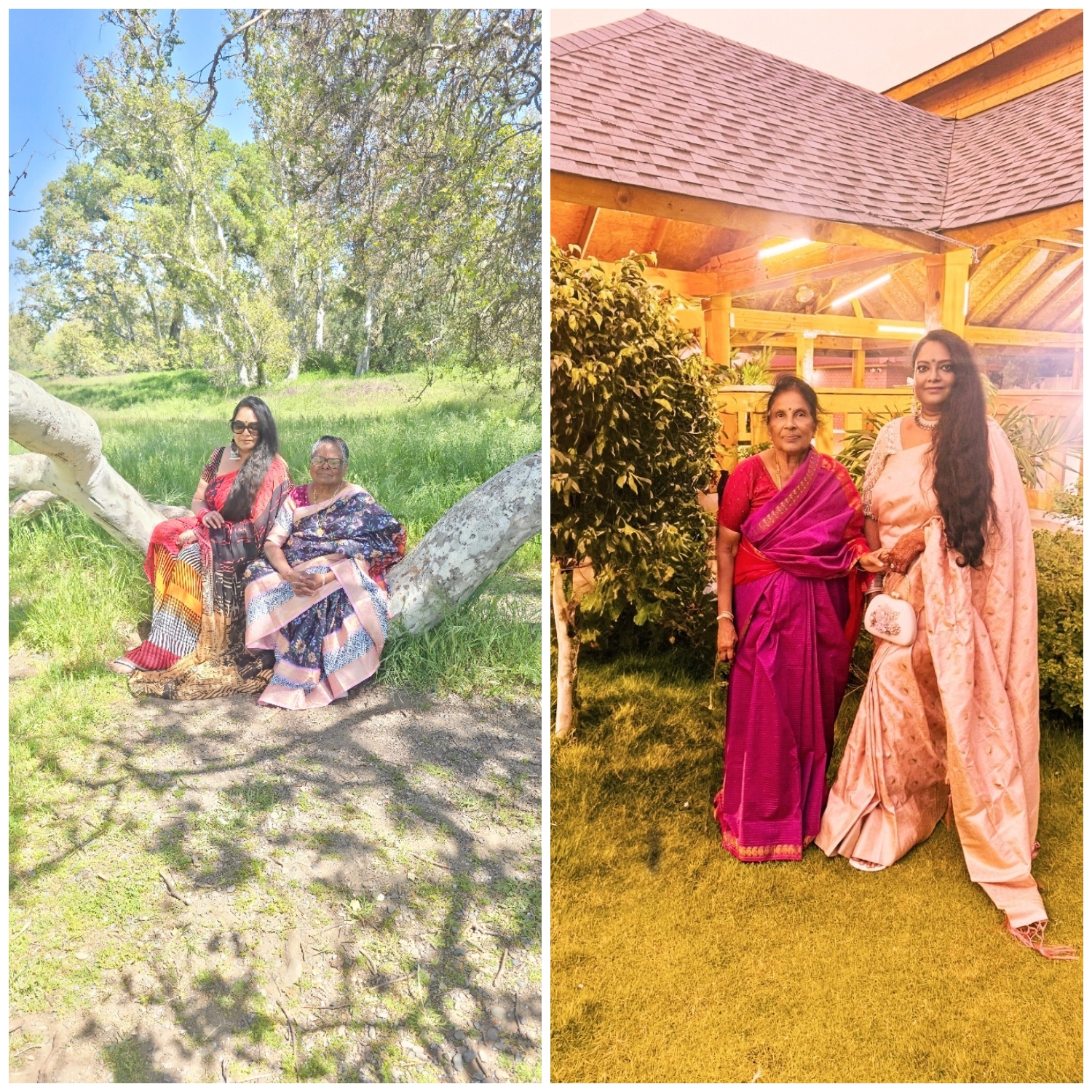
Motherhood’s heart, a sacred flame,Whispering solace, speaking love’s true name.A boundless spirit, selfless, vast, and deep,In countless forms, a watchful soul does keep. There’s Mother Land, our strong and verdant ground,Like Bharata Mata, where our roots are bound.On her broad back, she carries all our days,A silent strength in myriad, gentle ways. Then, mother of daughter, with patient grace,A gentle hand that tends the home’s warm space.In quiet strength, she manages and serves,A love enduring, calming all our nerves. And mother-in-law, a guide so kind and true,When daughters step into a world so new.She offers wisdom, helps to light the way,Building foundations for a brighter day. A daughter, too, finds strength she didn’t know,As motherhood’s own tender seeds do grow.A universal power, reborn and bright,Giving birth to two dear boys, a wondrous light. There are mothers too, beyond their own child’s plea,Who nurture family, for all the world to see.For father, mother, sisters, brothers dear,They take the mantle, banishing all fear. And fathers, standing tall, when mothers are away,Embrace the role, to guide through night and day.With tender hands, they fill the empty space,A living testament to motherhood’s embrace. In every form, a mother’s spirit shines,Crossing boundaries, breaking all confines.For every soul who holds this sacred part,A boundless love flowing from the heart. To all who mother, in every loving role,You make us vibrant, you make us whole.With deepest thanks, our grateful hearts we raise,Wishing you a truly wonderful Mother’s Day! ~Praveena Jogi
SHARE :
“Create your own happiness, don’t find happiness.” ~Praveena Jogi
We often hear about the “pursuit of happiness,” as if it’s some elusive treasure to be found. But what if happiness isn’t something we find, but something we create? As I like to say, “Create your own happiness, don’t find happiness.”
I believe that true, lasting happiness comes from within. Whether you’re a man or a woman, you possess the power to shape your own emotional landscape. Spending your time searching for happiness outside yourself can be a time-consuming and often disappointing endeavor. You might find fleeting moments of joy in another person’s happiness, or conversely, be affected by their sadness. But these external sources are temporary and unstable.
The key to real happiness lies in your own actions, your own efforts, and your own integrity. When you work hard, stay true to your values, and cultivate self-trust, you build a foundation for happiness that no one can take away. This isn’t to say that external factors don’t play a role in our lives, but it emphasizes that our internal state is paramount.
Creating happiness also means finding joy in what we have, without disturbing the peace around us. I recently experienced this firsthand: I visited a place where peacocks roamed freely, living alongside humans. They were accustomed to the cars, the roads, and the people. And yet, one of these peacocks was so happy to dance with me in my 10-second selfie video! This is creating happiness with what I had—a beautiful creature freely expressing itself. The peacock fully opened its feather fan, came close, and performed a dance for the camera. It was clear he enjoyed being on camera!
Creating your own happiness can open doors you never imagined. It can lead to a profound sense of fulfillment and even, as some believe, a connection to something greater.
The ancient epic the Mahabharata illustrates this concept in a powerful way. Duryodhana, a complex character, is said to have experienced a moment of pure joy and satisfaction on the battlefield, even as he faced death. This wasn’t a simple, superficial expression. It was a deep acceptance of his choices and their consequences.
Now, you might ask, “Duryodhana was not a virtuous person, so how could he go to heaven?” While the epic describes his eventual fate as including a period in hell, it also acknowledges the power of that final, genuine smile. His full-hearted happiness, in that moment, had a transformative power.
This highlights the incredible power of a smile and of happiness, especially the kind you create yourself. When you take ownership of your emotional well-being and actively cultivate joy, incredible things can happen.
We all know the convenience of online marketplaces. Need a stainless steel wine tumbler? A quick search on Amazon will give you countless options. But what happens when your needs go beyond the standard? What if you have a specific vision, a personal touch you want to bring to a product? That’s where Pravision steps in, going the extra mile to turn your unique ideas into reality.
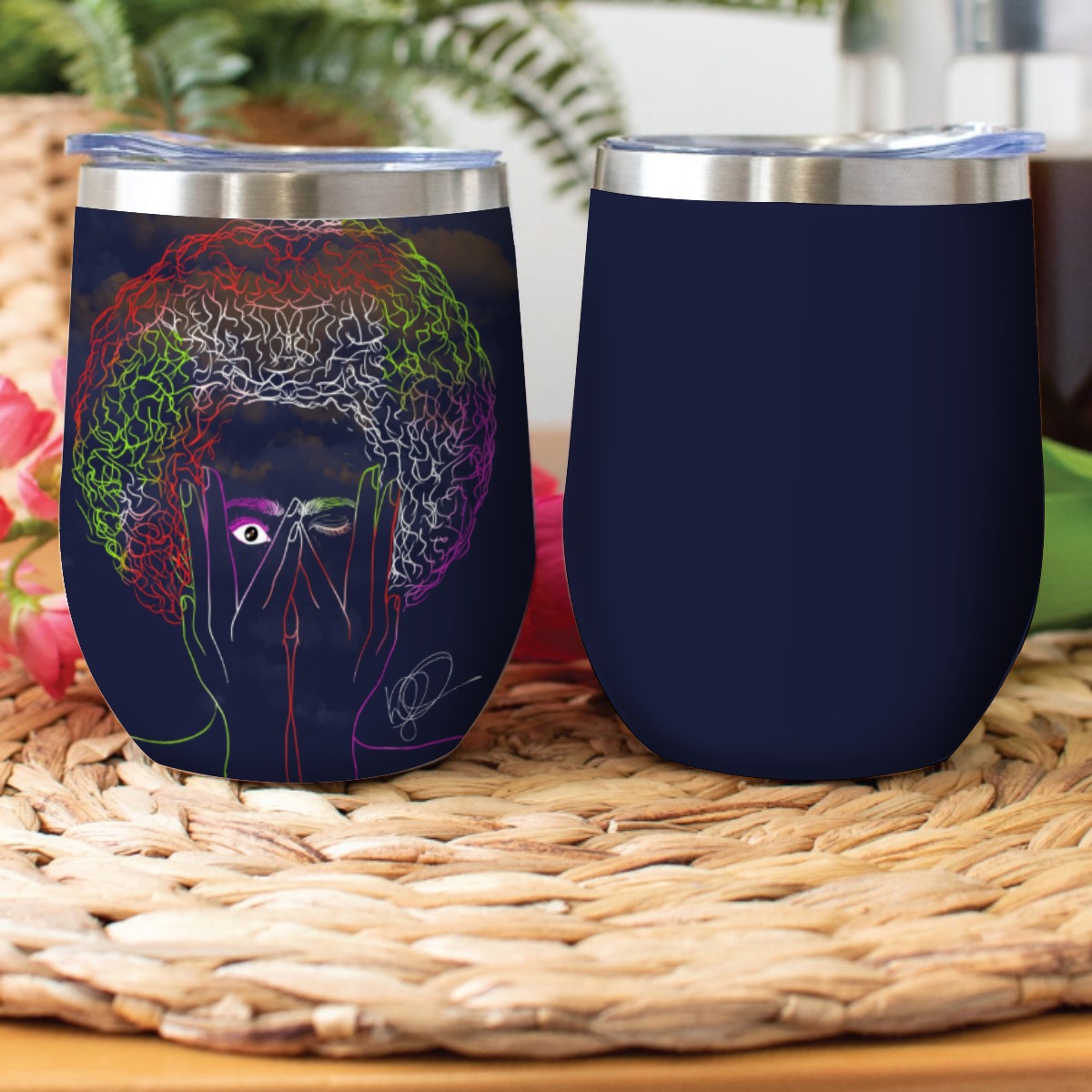
Take, for example, a recent order that truly highlights the Pravision difference. One of our valued customers, a published writer, came to us with a special request. She envisioned a 12oz stainless steel wine tumbler, not just in a simple white, but meticulously designed to showcase the cover of her book. This wasn’t just about slapping an image on a cup; it was about creating a cohesive product she could proudly resell alongside her literary work, complete with her signature.
While you might find similar stainless steel tumblers on Amazon, the ability to achieve this level of personalized customization is often limited. Generic options lack the attention to detail and the direct collaboration that brings a truly unique product to life.
At Pravision, we understand that your vision matters. For this writer’s project, our team took extra care at every step:
Color Precision: We ensured the white of the tumbler perfectly complemented the colors on her book cover image, creating a seamless visual harmony.
All-Over Design: The book cover wasn’t just a small print; it was thoughtfully applied across the entire tumbler for maximum impact.
Signature Integration: Her signature was carefully incorporated into the design, adding a personal and authentic touch.
Customer Collaboration: Crucially, the complete design was shared with the writer for her approval before it even went into production. This ensures complete satisfaction and eliminates any surprises.
This level of dedication, the back-and-forth communication, and the meticulous attention to detail are hallmarks of the Pravision experience. We’re not just fulfilling an order; we’re bringing your creative concepts to life.
From the initial design phase to the careful packaging and shipping, Pravision goes above and beyond to get your custom-crafted product to your doorstep. We understand the importance of your unique projects and are committed to providing a level of care and personalization you simply won’t find in standard online marketplaces.
So, the next time you have a vision that requires more than just a standard click-and-buy, remember Pravision. We’re here to transform your ideas into tangible, high-quality products, delivered with the dedication and attention you deserve.
I’ll admit it: I’ve had a bit of a reputation. In school, at home, even after getting married, I’ve been the one known for sleeping in. You might even call me a “brand ambassador” for the late morning rise. But does that make me lazy? Not exactly. If there’s work to be done, I’m up and at it – even if it means getting up, tackling the task, and then heading back to bed. Blame it on years of being on call with a pager, training me to function at odd hours.
My dad, though, always preached the gospel of the early morning. “Get up early,” he’d say, “and reading in the morning will help your brain store information.” Back in my school days, I was so desperate to avoid those 5 AM wake-up calls that I’d bribe my sister with sarees! But his words, despite my resistance, have stuck with me. He believed that the early morning fosters focus, productivity, and the cultivation of a good habit.
Ironically, “late” for me is 7 AM. I know, some of you early birds are probably laughing! But it brings up the question: Is there really “magic” in waking up early? Some people do it to please others, to score brownie points. My dad wanted me to do it for cognitive benefits. My grandmother had a different take: in her culture, waking up early at your mother-in-law’s house was a sign of respect.
So, who’s right? Well, in my experience, there’s truth to my dad’s perspective. The brain does feel different in those early hours. It’s fresh, rested, and there are fewer distractions. You can often power through tasks with surprising speed. And there’s also the practical benefit: finishing your work early leaves you with more free time later in the day.
But is it a universally “good habit”? That’s where it gets subjective. It depends on your lifestyle, your natural rhythms, and what works best for you.
For me, the real secret to waking up in the morning? It’s simple: turn off the fan!
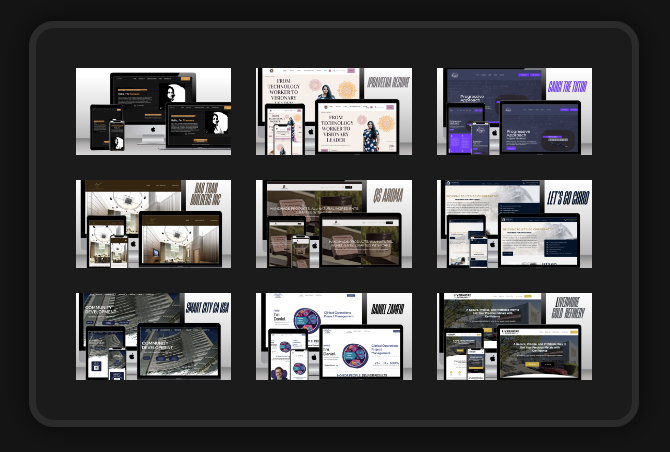
Your website is often the first interaction potential customers have with your business. That first impression matters – a lot. In fact, studies show that a staggering 95% of first impressions are design-related. Think about it: a visually appealing, easy-to-use website instantly builds trust and credibility. Conversely, an outdated, clunky site can send visitors running to your competitors.
Is Your Website Falling Short?
Many businesses are held back by websites that simply aren’t up to today’s standards. Does any of this sound familiar?
Low Conversions: Are you struggling to turn website visitors into paying customers? A poorly designed website can be a major conversion killer.
Boring Design: Is your site visually uninspiring? A generic or outdated design fails to capture attention and reflect the unique value of your brand.
Not Mobile-Friendly: In today’s mobile-first world, a website that doesn’t display perfectly on smartphones and tablets is unacceptable. You’re losing a huge portion of your audience.
Slow Page Load Times: Nobody wants to wait for a website to load. Slow loading speeds frustrate visitors and hurt your search engine rankings.
Difficult Navigation: Can visitors easily find what they’re looking for? Confusing navigation leads to frustration and lost opportunities.
The Pravision Solution: Websites Designed to Drive Results
At Pravision, we understand the power of effective web design. We create websites that are:
Engaging: We craft visually stunning designs that capture your audience’s attention and communicate your brand’s message effectively.
Mobile-Friendly: Your website will look and function flawlessly on any device, providing a seamless user experience.
Custom: We don’t believe in templates. Your website will be a unique reflection of your business and your vision.
Affordable: Professional web design doesn’t have to break the bank. We offer solutions that fit your budget.
Our Simple Process
Getting your dream website is easier than you think:
Schedule a Demo: Let’s discuss your needs and goals.
We Do The Work: Our expert team handles the design and development.
See Your New Website: Launch your beautiful and effective new online presence.
Ready to transform your online presence and start getting more from your website?
Pravision LLC is pleased to share key updates from our April 2025 newsletter, highlighting our commitment to providing cutting-edge technology solutions to government agencies. These announcements showcase our dedication to leadership in both Artificial Intelligence (AI) and Microsoft Cloud technologies.
Leading in Responsible AI: The GovAI Coalition
Pravision actively supports the advancement of responsible AI in government through our participation in the GovAI Coalition, a City of San José initiative. We offer a range of essential AI services to government agencies, including needs assessments, vendor recommendations, implementation support, and comprehensive training. You can also order these services through Pavilion, where Pravision is listed as a local supplier in the Livermore area: Pavilion Pravision Profile
Microsoft Cloud Solution Provider: Your M365 Partner
As a certified Microsoft Cloud Solution Provider (CSP) reseller, Pravision offers comprehensive Microsoft 365 solutions. We are your trusted partner for every aspect of your M365 journey, from seamless migration and efficient implementation to robust customization and security. We deliver “We handle it all. Your questions answered.”
Small Business Certification: Agility and Personalized Government Service
We’re proud to announce Pravision LLC’s achievement of Small Business Certification. This certification reinforces our commitment to delivering personalized, agile, and cost-effective solutions tailored to the unique needs of our government partners. We remain dedicated to providing the same high-quality service, now enhanced by the nimbleness and focus of a certified small business.
Pravision LLC is dedicated to equipping government agencies with the latest AI and Microsoft Cloud technologies, empowering them to operate efficiently and effectively.
Contact us today to discover how Pravision LLC can help your agency achieve its technology goals.
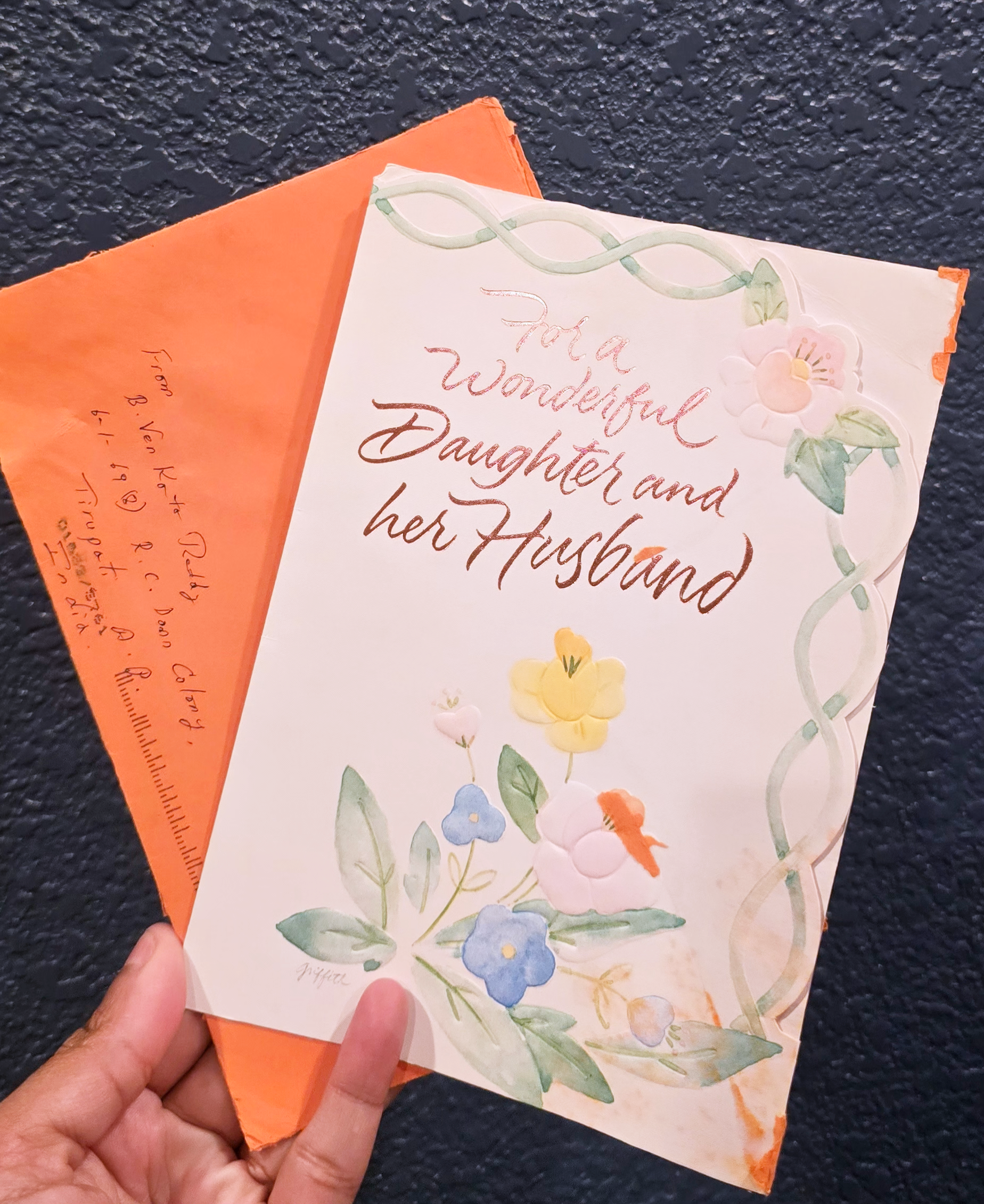
Thirty years. Thirty years of dust, memories, and forgotten corners. Who knew that a deep clean, a task often dreaded, could unearth a treasure more valuable than any gem? While tackling the clutter of our home, I stumbled upon a weathered cardboard box, its contents shrouded in the mystery of time. And inside, nestled among old photos and forgotten trinkets, were two anniversary cards.
Simple, printed cards, signed with a familiar, loving hand. My dad.
He’d been gone for nearly three decades, taken too soon, leaving a void that time could soften but never truly fill. These cards, sent to my husband and me in our fledgling years of marriage, were a whisper from the past, a tangible reminder of his love. Two years. That’s all the anniversary cards there were, because he was gone after that.
But those two cards held more than just ink and paper. They held wishes. Wishes for happiness, for enduring love, for a future he wouldn’t see. They held his blessing, a silent promise that even in his absence, his love would surround us.
And then, there was his handwriting. Oh my. His handwriting. It was like pearls on the page, delicate and precise. As I traced the loops and curves, a tear welled up in my eye. Not a tear of sorrow, but a tear of pure, unadulterated joy. To see his handwriting again, to be able to touch his wishes, was a gift beyond measure.
And the names! My dad, the only person in the world who ever called me “Nanni,” and my husband, “Nanna.” I’d completely forgotten that sweet, unique combination he’d created for us. “Nanni” and “Nanna.” It was a perfect, loving pairing, a little secret language just for us. Seeing it written there, on those cards, brought back a flood of memories, the sound of his voice echoing in my ears.
The joy of discovering these artifacts, these tangible pieces of the past, is utterly priceless. It’s a rush of emotion, a flood of memories, a warm embrace from a time long gone. It’s more valuable than a million dollars, because it’s a connection to something irreplaceable.
And it made me think. In our fast-paced, digital world, where communication is instant and fleeting, we are losing something precious. We trade heartfelt letters for hurried texts, tangible gifts for digital emojis. We send our love in ephemeral WhatsApp messages, which are often deleted, forgotten, or lost in the digital abyss.
Where is the sentiment in a disappearing message? Where is the tangible proof of love and blessing? Where is the cardboard box, filled with treasures to be discovered by future generations?
We are losing the art of keeping, of treasuring, of holding onto the moments that truly matter. We’re losing the ability to physically touch a piece of the past, to feel the weight of a memory in our hands.
My dad’s anniversary cards are a reminder. A reminder to slow down, to cherish the moments, to create tangible memories that will outlast the digital age. They’re a reminder that love, blessings, and wishes, though expressed in a simple card, are eternal.
Let’s not let the joy of discovering these kinds of artifacts fade away. Let’s create moments, tangible and real, that our loved ones can hold onto, long after we’re gone. Let’s write letters, send cards, print photos, and create physical memories that will stand the test of time.
Because in the end, it’s not the fleeting messages that matter. It’s the enduring love, the timeless blessings, and the priceless joy of discovery that truly enrich our lives. And sometimes, all it takes is a dusty cardboard box to remind us of that.
Simple, printed cards, signed with a familiar, loving hand. My dad.
He’d been gone for nearly three decades, taken too soon, leaving a void that time could soften but never truly fill. These cards, sent to my husband and me in our fledgling years of marriage, were a whisper from the past, a tangible reminder of his love. Two years. That’s all the anniversary cards there were, because he was gone after that.
But those two cards held more than just ink and paper. They held wishes. Wishes for happiness, for enduring love, for a future he wouldn’t see. They held his blessing, a silent promise that even in his absence, his love would surround us.
And then, there was his handwriting. Oh my. His handwriting. It was like pearls on the page, delicate and precise. As I traced the loops and curves, a tear welled up in my eye. Not a tear of sorrow, but a tear of pure, unadulterated joy. To see his handwriting again, to be able to touch his wishes, was a gift beyond measure.
The joy of discovering these artifacts, these tangible pieces of the past, is utterly priceless. It’s a rush of emotion, a flood of memories, a warm embrace from a time long gone. It’s more valuable than a million dollars, because it’s a connection to something irreplaceable.
And it made me think. In our fast-paced, digital world, where communication is instant and fleeting, we are losing something precious. We trade heartfelt letters for hurried texts, tangible gifts for digital emojis. We send our love in ephemeral WhatsApp messages, which are often deleted, forgotten, or lost in the digital abyss.
Where is the sentiment in a disappearing message? Where is the tangible proof of love and blessing? Where is the cardboard box, filled with treasures to be discovered by future generations?
We are losing the art of keeping, of treasuring, of holding onto the moments that truly matter. We’re losing the ability to physically touch a piece of the past, to feel the weight of a memory in our hands.
My dad’s anniversary cards are a reminder. A reminder to slow down, to cherish the moments, to create tangible memories that will outlast the digital age. They’re a reminder that love, blessings, and wishes, though expressed in a simple card, are eternal.
Let’s not let the joy of discovering these kinds of artifacts fade away. Let’s create moments, tangible and real, that our loved ones can hold onto, long after we’re gone. Let’s write letters, send cards, print photos, and create physical memories that will stand the test of time.
Because in the end, it’s not the fleeting messages that matter. It’s the enduring love, the timeless blessings, and the priceless joy of discovery that truly enrich our lives. And sometimes, all it takes is a dusty cardboard box to remind us of that.
(Image: A person, Praveena Jogi, is walking along a path that winds into the distance. The path is gravel and is surrounded by green grass. The sky is bright blue with a long white contrail stretching across it.)
We’ve all heard the age-old saying: “What is written in your destiny, you will get it. What is not written, you will never get it.” It’s a phrase that can bring comfort in times of disappointment, yet also spark a sense of powerlessness. But what if we shifted our perspective? What if we viewed destiny not as a rigid, unyielding force, but as a guiding hand gently steering us towards our ultimate good?
This image speaks to that journey, doesn’t it? Here I am, walking a path that winds into the distance, towards an expansive horizon. The path behind, though traveled, recedes, becoming less defined. It reminds me that I am always moving forward, always on a journey, even when I can’t see the destination. The bright blue sky with that single contrail stretching out ahead gives a sense of openness and infinite possibilities.
It’s easy to feel sadness when things don’t go as planned. We may yearn for a different outcome, a different turn in the road. But what if those perceived setbacks are actually guiding us? What if the closed doors are leading us to something greater, something more aligned with our true purpose?
The expansive landscape in the image suggests hope and possibility. It speaks of a future that is still unfolding, a future where “better plans,” as we often say, may be waiting. It requires me to trust, to have faith that even when I don’t understand the present, a larger design is at play.
This path isn’t always easy. There may be moments of doubt, moments when I want to turn back. But the image compels me to keep going. There’s a sense of purpose in that forward movement, a sense that what lies ahead is worth the journey.
So, let this image be a reminder: embrace the path you’re on. Trust that even in moments of uncertainty, you are being guided. The path ahead may lead you to places you never imagined, to a future that is richer and more fulfilling than you could have planned. Keep walking towards that horizon, towards the light of what is yet to come.
A New Chapter for Our Business and Our Commitment to California
Livermore, CA – March 21, 2025 – Pravision LLC is excited to announce our official certification as a Small Business (SB) by the State of California. This achievement marks a significant milestone for our company, underscoring our dedication to growth, service, and contributing to the state’s vibrant economy.
This certification, awarded by the State of California, enables Pravision LLC to participate in the State’s Small Business program, opening the door to a wider range of contracting opportunities and allowing us to better serve the state. We are thrilled about the potential to expand our services and contribute to projects that benefit California communities and businesses.
What does this mean for Pravision LLC and California?
Increased Opportunities: We are now eligible to participate in the State’s Small Business program, granting us access to a wider range of contracting opportunities and increased visibility for state projects.
Commitment to California: This certification underscores our unwavering dedication to contributing to the state’s economy, supporting local initiatives, and providing valuable services to California businesses and organizations.
Enhanced Partnerships: We look forward to building strong and collaborative partnerships with state agencies, other organizations, and fellow businesses to achieve shared goals and create positive impact.
Recognition of Dedication: “This certification reflects our hard work, dedication, and unwavering commitment to excellence,” said Praveena Jogi, Founder & CEO of Pravision LLC. “We are proud to achieve this recognition and look forward to the new possibilities it creates. We are eager to bring our expertise and innovative solutions to state projects and contribute to the success of California.”
Pravision LLC’s Small Business (SB) Certification ID is 2044456.
The State of California Small Business (SB) certification is designed to support small businesses, promote economic growth within the state, and foster a diverse and inclusive business environment. Pravision LLC is committed to upholding the program’s standards, delivering exceptional results, and leveraging this opportunity to its fullest potential.
Life, as we all know, isn’t always a vibrant masterpiece. Sometimes, it feels like a stark, black and white photograph, devoid of the warmth and richness we crave. Worries creep in, shadows lengthen, and it’s easy to feel overwhelmed by the monochrome landscape of our challenges. But what if, instead of succumbing to the gray, we actively sought out the splashes of color that are always waiting to be discovered?
The Choice: Tears or Tint?
We’ve all been there – the weight of the world pressing down, the feeling that nothing is going right. In those moments, it’s tempting to let the tears flow, to dwell on the negativity, and to allow the black and white to consume us entirely. But here’s the thing: crying, while sometimes necessary, rarely solves the problem. It simply adds more shades of gray to an already dim picture. We don’t get angry at the rain when it falls, the summer heat when it scorches, or the winter cold when it chills. We understand these are natural occurrences, beyond our immediate control. So why do we so often get angry at ourselves or others for the inevitable challenges and imperfections of life? Instead, what if we chose to smile? What if we consciously decided to seek out the vibrant hues that can transform our perspective?
The Magic of a Smile
A smile is more than just a facial expression; it’s a powerful tool for shifting our mindset. It releases endorphins, those feel-good chemicals that boost our mood and reduce stress. It radiates positivity, not just to ourselves, but to everyone around us. A smile can be the spark that ignites a chain reaction of happiness.
Finding Your Colors
Finding your colors isn’t about ignoring the challenges; it’s about shifting your focus. It’s about recognizing the small joys that often go unnoticed:
Gratitude: Take a moment to appreciate the good things in your life, no matter how small. A warm cup of coffee, a kind word from a friend, a beautiful sunset – these are the colors that add depth to our experience.
Connection: Reach out to loved ones, share a laugh, offer a helping hand. Human connection is a powerful antidote to loneliness and despair. However, in today’s world, it’s essential to discern genuine connection from superficial interactions. Be discerning and don’t fall for the false or fake smile. Seek out authentic relationships where you feel seen, heard, and valued.
Creativity: Engage in activities that ignite your passion. Paint, write, play music, dance – express yourself and let your inner artist shine.
Mindfulness: Take a deep breath, slow down, and appreciate the present moment. Observe the beauty around you, the subtle nuances of life that often escape our notice.
Acts of Kindness: Helping others not only brings joy to them, but also to yourself.
Don’t Waste Time on Gray
Time is precious. Why waste it dwelling on negativity when you can actively create your own happiness? Choose to smile, choose to find your colors, and choose to live a life filled with joy.
Remember, even in the darkest of times, there is always a glimmer of light, a splash of color waiting to be discovered. So, smile, embrace the beauty around you, and paint your life with the vibrant hues of happiness. But remember to smile your life without hurting others around you. Create a beauty around you without hurting others around you, knowing or unknowing.