
The Blind Spot of Generosity
Why We Must Stop Forcing Solutions on Passive Problems
We have all been taught that the four-letter word HELP is something we should offer freely. We see someone we care about drowning—struggling financially, stuck in a career rut, or spinning their wheels for years—and our natural instinct is to build them a bridge to safety.
Because we have the resources, the network, or the experience, we step in to offer help that wasn’t explicitly asked for. We think we are being visionary mentors.
But there is a painful, hidden life lesson in unsolicited generosity: You cannot want someone’s success more than they want it themselves. And if you try, you will end up being resented for it.
When you offer high-level help to a low-motivation mindset, things go wrong in very specific ways. Here is the anatomy of why forcing a solution on someone else’s problem backfires—and the hard boundaries we must set to protect our peace.
1. The Trap of the “Hand-Up” vs. the “Hand-Out”
There are two very different ways people want to be helped, and confusing the two is where most of our heartbreak happens:
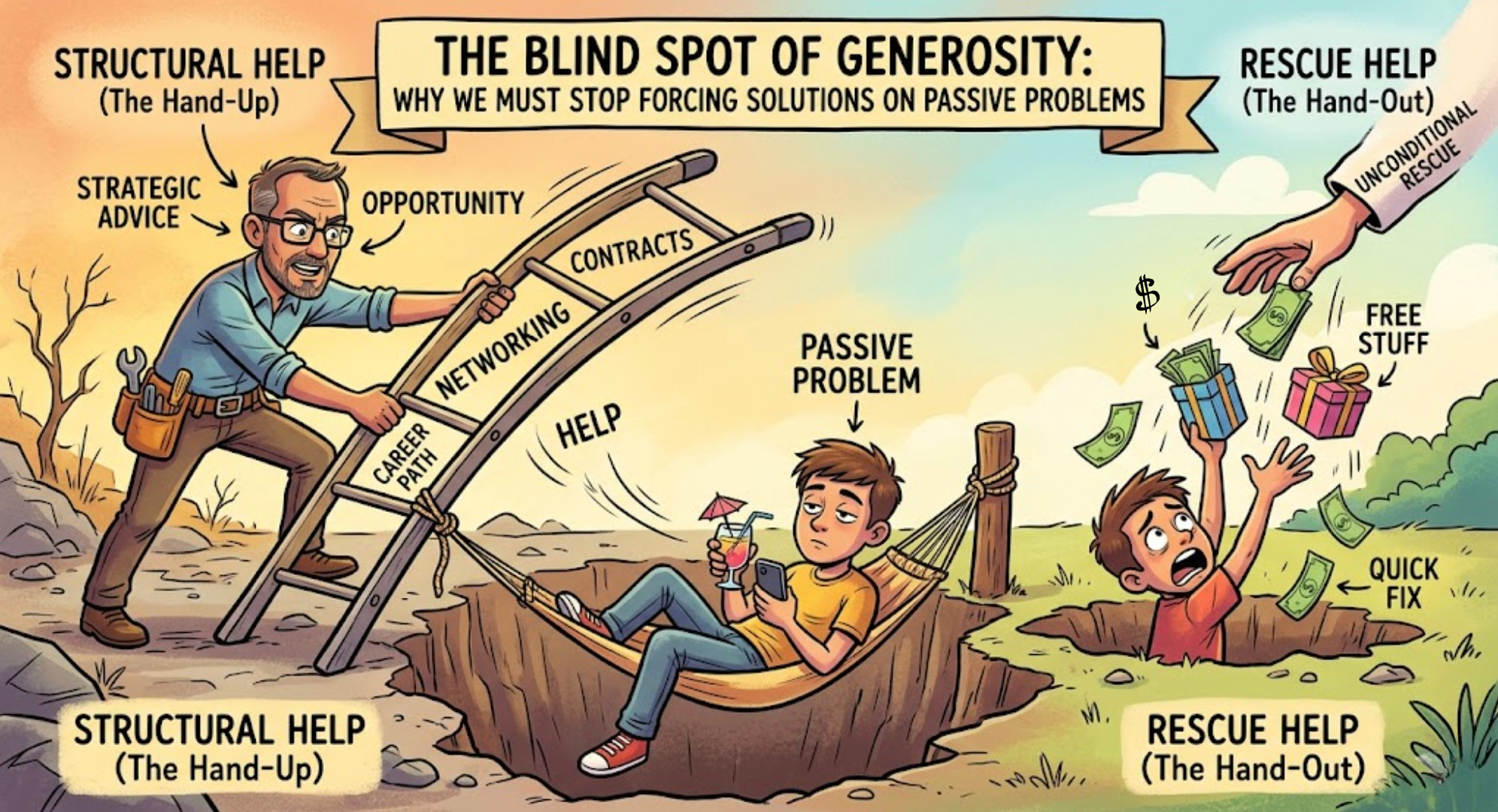
Rescue Help (The Hand-Out): This is passive. It’s when someone wants cash, a free place to stay, or a temporary bailout to take the immediate pressure off. It requires zero effort from them.
Structural Help (The Hand-Up): This is active. This is when you give them a job lead, pay for a professional development opportunity, or introduce them to your network. This requires them to step up, work, and risk failure.
The ultimate blind spot of generosity is offering Structural Help to someone who only ever wanted Rescue Help. When you hand a fishing rod to someone who just wanted a free fish, they won’t thank you for the tool—they will resent you for making them work for their dinner.
2. When Opportunity Looks Like “Rules”
When you invest your hard-earned money and professional reputation into creating an opportunity for someone else, you expect them to treat it with respect. You expect them to hustle, network, and show gratitude.
But to an entitled or unmotivated mind, your high expectations don’t look like a gift; they look like a prison.
They will take the funded training, the interview, or the contract opportunity, and instead of seeing a career lifeline, they will treat it as a hobby or a leisure activity. And the moment you ask them to take it seriously? You become the “strict” bad guy. They will flip the script, play the victim, and complain to anyone who will listen that your help came with too many strings attached.
3. The Generational / Cultural Shield
The most frustrating part of this dynamic is the aftermath. When called out on their lack of effort, the person (and often their enablers) will hide behind excuses. They will say:
“I never asked for your help anyway.”
“That’s just how that generation is.”
“You’re being too intense; they just wanted to have some fun.”
They will rewrite history to make your massive financial and personal sacrifice look like an uninvited nuisance, purely to protect their own ego from the reality that they wasted a golden opportunity.
🛑 The New Rule of Engagement
If you take away only one lesson from this, let it be this: Never invest more into a solution than the person with the problem is investing themselves. > If they are putting 0% effort into fixing their life, your investment should be 0%. If they are sweating, hustling, and trying their absolute best, then you can match their energy. But matching apathy with high-level opportunity is a recipe for financial loss and emotional burnout.
The Takeaway
Closing the door on helping someone you care about is incredibly heavy. It feels counterintuitive to everything we are taught about being a good person or a supportive mentor.
But true wisdom lies in knowing when your help is actually harming both of you. By constantly rescuing someone or forcing opportunities on them, you are enabling their complacency and draining your own resources.
The next time you see someone struggling and feel the urge to swoop in and save the day, stop and ask yourself: Are they holding the line, or am I just pulling dead weight? Let them ask. Let them work. And save your life-changing opportunities for the people who are hungry enough to actually run with them.
Have you ever given someone a major opportunity only to watch them treat it like a joke? How did you handle the boundary afterward? Let me know in the comments below.
Image Gallery