
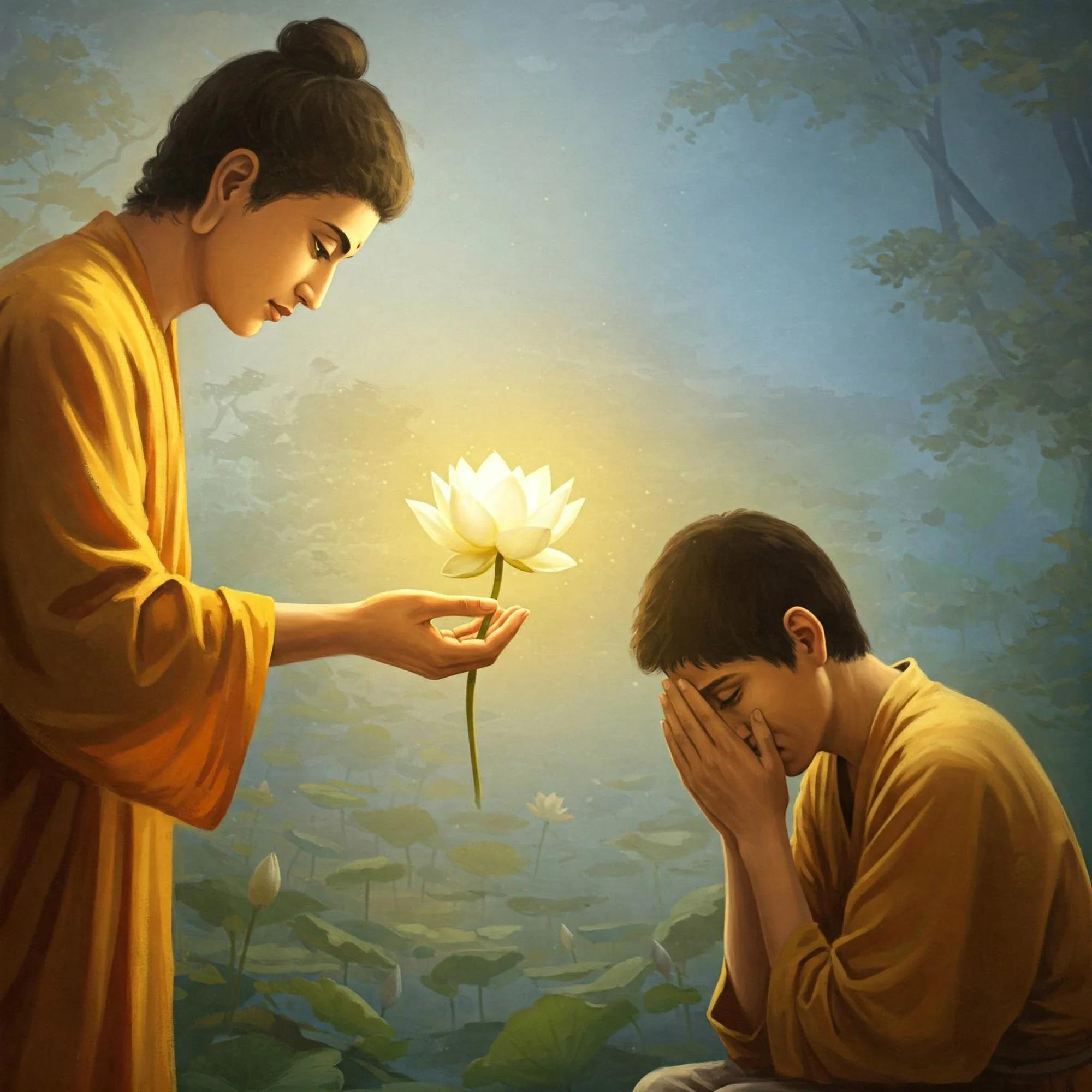


The Heart of Danam
Friends, brothers and sisters, gather close and listen to a tale of ancient wisdom, a story of Danam, the sacred art of giving.
Danam, meaning “donation” is not merely an act of parting with possessions; it is a profound ritual, a gesture of compassion that echoes through the corridors of time. It is a bridge that connects us to the divine, to our ancestors, and to the very essence of our being.
Yet, in the clamor of the modern world, the true meaning of Danam has become obscured, its purity veiled by worldly desires. It has been reduced to a mere transaction, a means to an end – a ladder to climb to heaven, a currency to buy forgiveness, a tool to gain social standing or even evade taxes.
But let us not be swayed by these fleeting illusions. True Danam transcends such shallow motivations. It is not a formula to erase our misdeeds or a bargaining chip for heavenly rewards. It is a selfless offering from the depths of our hearts, an act of kindness that flows from the wellspring of our spirit.
Our ancient texts illuminate the path of Danam, revealing its diverse forms. There is Dasha Danam, where ten types of offerings are made to those in need, a symphony of generosity that touches every aspect of life. There is Go-Danam, the gift of a cow, a symbol of life and sustenance, reminding us of our connection to nature’s bounty. There is Gho-dhanam, a selfless act of environmental stewardship, a pledge to protect and nurture the earth that sustains us. And there is Vidya-Danam, the gift of knowledge, the most precious of all, for it empowers and liberates the mind, igniting the flame of wisdom within.
We also have Ahara-dana, the offering of food, a simple yet profound act that nourishes the body and satisfies hunger. Ausadha-dana, the gift of medicine, brings healing and comfort to those suffering from illness. Jnana-dana, the sharing of knowledge, illuminates the path towards understanding and enlightenment. And Abhaya-dana, the offering of protection and fearlessness, provides solace and security to those who feel vulnerable and lost.
But amidst these noble forms of Danam, you may notice one striking omission: “money-dana.” Why, then, has money become the default mode of giving in our times? Perhaps it is the allure of convenience, the illusion of detachment, the mistaken belief that we can fulfill our duty with a mere transfer of funds, without truly engaging with the needs of others.
True Danam, however, demands discernment, a deep understanding of the recipient’s needs, and a willingness to offer our gifts in a way that truly uplifts and empowers. It is not about blindly giving; it is about giving wisely.
Imagine a soul standing before you, their eyes etched with hardship, their spirit burdened by life’s challenges. Would simply handing them money be a true act of Danam? What if those funds fuel their despair, leading them further down a path of suffering, or worse, enable them to harm themselves or others? Would we not then become unwitting accomplices in their pain, our well-intentioned Danam inadvertently contributing to their downfall?
I recall a poignant encounter in Oakland, California. As my mother and I left a restaurant, a man approached us, his hunger palpable. I offered him our leftovers, which he gratefully accepted. But sensing his deeper need, I returned to the restaurant and bought him a nourishing meal, enough to satisfy his hunger and provide for the days ahead. He didn’t ask for money; he simply needed sustenance. And in that moment, I realized the profound wisdom of Danam – to recognize the true need and offer support in the most appropriate and beneficial way.
Therefore, let us not judge those who seek our assistance, but let us be mindful of how our Danam is utilized. Let us offer food to the hungry, medicine to the sick, knowledge to the ignorant, and protection to the vulnerable. Let us give with wisdom and compassion, ensuring that our gifts contribute to the well-being of others and the upliftment of our society.
And let us be vigilant against “Apatra-danam,” the act of giving to those who are unworthy or unfit to receive. This does not imply judging a person’s character, but rather assessing whether our offering will truly benefit them or inadvertently cause further harm.
Just as Shayana-dana provides comfort and rest, Vastra-dana offers protection and dignity, Kumkum-dana symbolizes blessings and long life, and Chandana-dana signifies purity and protection, our Danam should always aim to uplift and support.
Finally, my friends, remember the most sacred of all Danams: “Vagdanam,” the gift of our word. A promise made is a sacred bond, a testament to our integrity. If you cannot keep a promise, do not make it. For a broken promise is not just a disappointment; it is a betrayal of trust, a wound to the heart. Let our words be as precious as our gifts, reflecting our commitment to truthfulness and our unwavering dedication to fulfilling our commitments.
May we all strive to embody the true spirit of Danam, and may our acts of giving be a source of blessing and inspiration for generations to come.
Thank You.
SHARE :
Facebook
Twitter
LinkedIn
More Articles

From the Yugas to the Natural World
February 23, 2026
The Marriage Debt: From the Yugas to the Natural World