The Compass We Forget in the Sunshine and Why Real Integrity Belongs in Every Season

Wait a second—are you wondering if this is even possible? You might be asking yourself, “Can a person really be that blind to their own actions until trouble hits?”

Believe me, it happens to all of us. We are ordinary humans with everyday morals. In the era we live in, both sides—the light and the dark, the good and the bad—coexist right inside us. (We can save the deep dive on how these dual forces live within us for another day; for now, let’s keep our focus on the compass.)

When life is good, the sun is shining, and everything seems to be going our way, we rarely look down at the inner compass in our hands. When we are winning, convenience easily replaces conscience. We might cut a corner, turn a blind eye to an unfairness, or quiet that inner voice telling us to take the high road. We tell ourselves, “Whatever I’m doing is fine—look how well things are going.” In those moments, unrighteousness (Adharma) hides easily behind the glitter of success, and true moral duty (Dharma) is nowhere in the picture.

The Sudden Search for Fairness

The shift happens when the weather turns.

When a storm hits, when plans fall apart, or when someone else treats us unfairly, our perspective changes instantly. The very person who ignored the high road during their rise suddenly becomes a strict defender of fairness. In our difficult times, we remember Dharma vividly because we need it to protect us.

It isn’t that we forget what is right when life is good—it’s that we don’t think about Dharma until we are the ones getting hurt.

The Lessons of the Battlefield: Karna’s Question

This human tendency isn’t new; it has been part of our story for thousands of years. Think back to the legendary scene on the battlefield of Kurukshetra in the Mahabharata.

Karna is stranded on the ground, unarmed, trying to lift his trapped chariot wheel out of the mud. Lord Krishna tells Arjuna that this is the moment to strike. Shocked, Karna turns to Krishna and asks about Dharma: “How can you guide Arjuna to strike down an unarmed warrior on the ground? Where is the Dharma in this?”

Krishna simply responds with a gentle, knowing smile. He asks Karna: “You speak of Dharma today? Where was your thought of Dharma when a helpless Draupadi was insulted in the court? Where was your Dharma when Abhimanyu was trapped and slain by many? You never remembered Dharma when it was convenient for you—how can you demand its protection only when your life is on the line?”

That battlefield scene is the ultimate mirror of the human condition. When we are doing wrong or benefiting from an unfair situation, Dharma isn’t even in our minds. But the second someone does something wrong to us, Dharma is the first thing we demand.

Who Answers Our Question Today?

During the Mahabharata, Lord Krishna was right there on the chariot to answer Karna’s question. But whom do we have today? Can we ask that question to anyone around us? If someone finds themselves in Karna’s shoes today, would they even dare to ask out loud, “Where is the Dharma?”

The truth is, the best person to ask is the one looking back at you in the mirror.

Inside every single person lives an inner Krishna—our consciousness, our quiet inner truth. Before demanding fairness from the world when things go wrong, we have to stand before our own inner Krishna and be completely truthful with ourselves. We must ask:

  • “Have I looked for Dharma in all aspects of my life, or am I only searching for it now because I am hurting?”

  • “Did I uphold fairness when I had all the power, or only now that I am vulnerable?”

Choosing Your Compass Today

The inspiring truth is that you don’t have to wait for a crisis to hold onto your values.

Real strength isn’t using moral principles as an emergency shield only when things go wrong. True nobility is choosing to look at your compass while you are winning.

  • In Your Work & Life: Measure your success not just by the victory, but by the dignity of the path you took to get there.

  • In Your Relationships: Practice kindness, fairness, and truth even when you hold all the power and nobody is watching.

  • In Everyday Moments: Let your inner compass guide you when the road is completely clear, not just when you are stuck in the mud.

When you live with alignment, honesty, and care during your best days, you build a foundation that no storm can shake. Difficult times may still come—they do for everyone—but when they arrive, you won’t need to scramble for Dharma. It will already be right there inside you, giving you an unshakable peace.


Image Gallery

Time, Dharma, and Discipline: The Bhagavad Gita-Inspired Guide

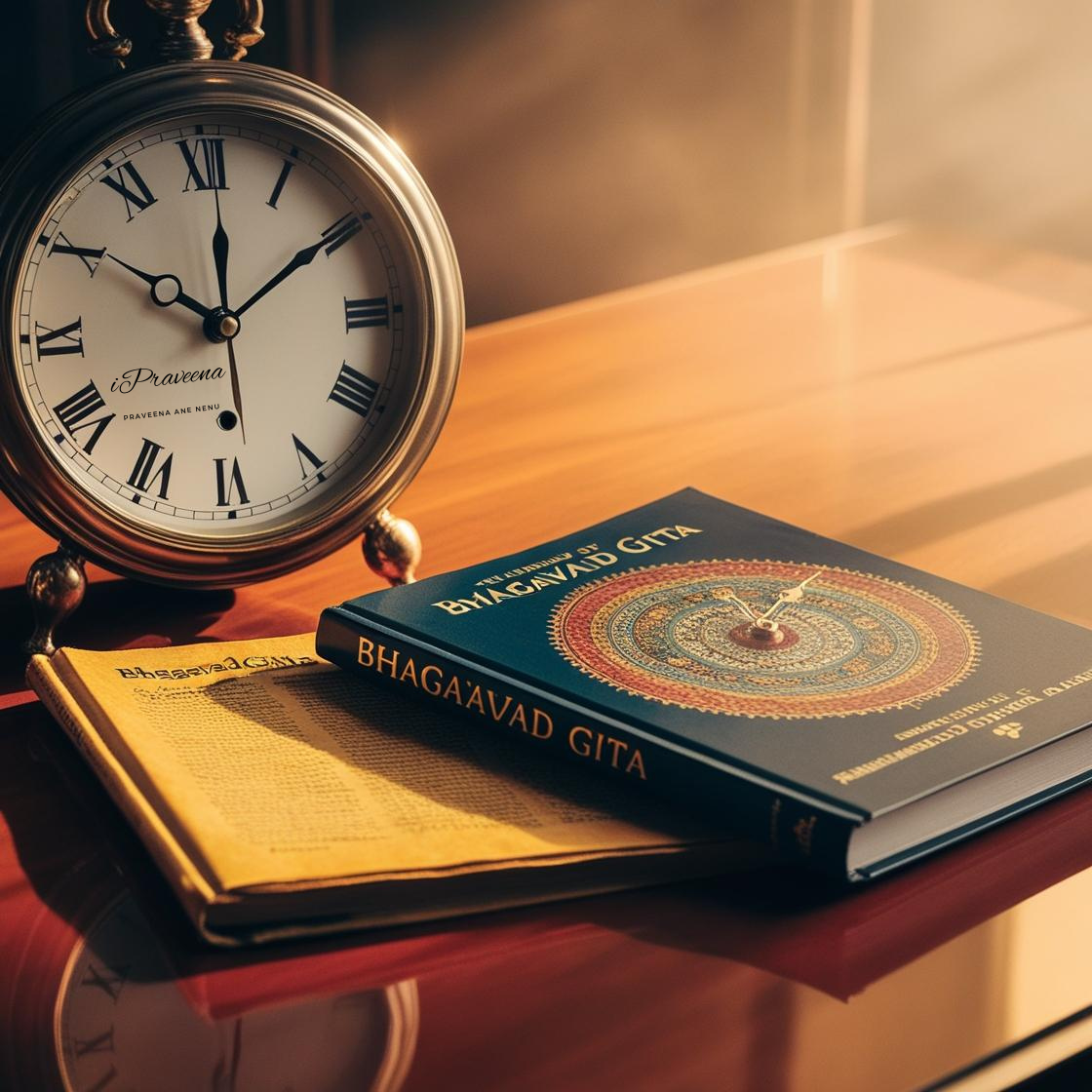
Vintage brass clock with Roman numerals next to Bhagavad Gita book on wooden surface in warm sunlight

Time. It’s the one resource we all have in equal measure, yet it often feels like there’s never enough. The clock keeps ticking, relentlessly marching forward, and it’s up to us to decide how we spend those precious moments. This is where discipline comes in – the bridge between good intentions and consistent action. Think of time as a river. It’s constantly flowing, and you can choose to either drift aimlessly along or navigate purposefully towards your destination. Discipline is the paddle that allows you to steer, to make conscious choices about where you want to go and how you’ll get there.

कालोऽस्मि लोकक्षयकृत्प्रवृद्धो लोकान्समाहर्तुमिह प्रवृत्त:।

ऋतेऽपि त्वां न भविष्यन्ति सर्वे येऽवस्थिता: प्रत्यनीकेषु योधा: || – Krishna says in the Bhagavad Gita.

Translation:

“Time I am, the great destroyer of the worlds, and I have come here to destroy all people. With the exception of you [the Pandavas], all the warriors standing here on both sides shall cease to exist.” – Bhagavad Gita 11.32

This verse, spoken by Krishna, highlights the all-consuming nature of time. It emphasizes that time is an unstoppable force, ultimately leading to the end of everything. However, within this seemingly bleak message lies a powerful call to action: to use our time wisely and purposefully.

Why is Mastering Time So Important?

  • Achieving Goals: Time is the raw material for achieving your dreams. Whether it’s writing a book, starting a business, or learning a new skill, consistent effort over time is the key to success.
  • Reducing Stress: Feeling overwhelmed often stems from a lack of control over our time. By prioritizing tasks and managing our schedules effectively, we reduce stress and create a sense of calm.
  • Improving Relationships: Time is an investment in our relationships. By dedicating quality time to loved ones, we nurture those bonds and create lasting memories.
  • Boosting Productivity: Effective time management allows us to focus on what truly matters, leading to increased productivity and a sense of accomplishment.
  • Living a Fulfilling Life: Ultimately, mastering time allows us to live a life aligned with our values, pursuing our passions and making a meaningful impact.

But mastering time isn’t just about personal productivity; it’s also about respecting the time of others. Being disciplined with your time means:

  • Being Punctual: Arrive on time for appointments and meetings. Value other people’s time as much as your own.
  • Being Prepared: Don’t waste time fumbling for information or scrambling to meet deadlines. Be organized and ready to contribute.
  • Being Present: When you’re with someone, give them your full attention. Avoid distractions and be fully engaged in the moment.

Cultivating Discipline: Your Key to Time Mastery

Discipline isn’t about rigid rules and self-denial. It’s about making conscious choices and developing habits that support your goals. Here are a few tips to cultivate discipline:

  • Set Clear Goals: Knowing what you want to achieve provides direction and motivation.
  • Prioritize Ruthlessly: Focus on the most important tasks and learn to say “no” to distractions.
  • Break Down Large Tasks: Overwhelm is the enemy of progress. Break down large goals into smaller, manageable steps.
  • Create a Schedule: A schedule provides structure and helps you allocate time effectively.
  • Eliminate Time Wasters: Identify and minimize activities that drain your time and energy.
  • Practice Self-Care: Rest, relaxation, and rejuvenation are essential for maintaining discipline.
  • Be Patient and Persistent: Discipline is a muscle that needs to be trained. Don’t get discouraged by setbacks; keep practicing and refining your approach.

Time and discipline are intertwined forces that shape our lives. By harnessing the power of discipline, we can make the most of our time, achieving our goals, building strong relationships, and living a life filled with purpose and meaning. Remember, every moment is an opportunity to create the future you desire. And by respecting the time of others, we show that we value them and their contributions.

In the movie Avengers: Infinity War, Thanos believes that there is only one power that can beat all others: the great power of time. This echoes the profound wisdom found in the Bhagavad Gita, where Krishna reveals himself as Time, the ultimate force of the universe. Both remind us of the immense power and undeniable influence that time has over all things.

SHARE :

Facebook

Twitter

LinkedIn

Written By

Praveena Jogi


Let’s Talk

More Articles